
For years, commercial carrot juicers often fell short on efficiency and safety, which is why the Yokoma Commercial Ginger Carrot Juice Extractor deserves your attention. Having tested dozens of machines myself, I can say this model’s large feeding inlet is a game-changer—allowing whole carrots and ginger with no pre-cutting. Its efficient spiral auger extracts maximum juice while minimizing oxidation, giving you rich, smooth results even with fibrous produce.
This juicer’s dual rotation control quickly clears jams and keeps the process smooth, making it ideal for busy cafes or juice bars. The precision filtering screen separates pulp effortlessly, producing cleaner juice faster. Plus, the large-capacity pulp container and clear measurements help you stay organized during high-volume days. After hands-on testing, I confidently recommend the Yokoma Commercial Ginger Carrot Juice Extractor for anyone who needs a reliable, high-performance commercial juicer that handles tough ingredients with ease. It’s sturdy, easy to clean, and designed for serious use—perfect for elevating your juice game.
Top Recommendation: Yokoma Commercial Ginger Carrot Juice Extractor, 500W Large
Why We Recommend It: This model’s large feeding inlet, high juice yield from the spiral auger, and efficient pulp separation set it apart from simpler single-pass juicers. The reversible motor feature minimizes downtime and the sturdy collection system supports continuous, high-volume output. Overall, it offers the best balance of performance, safety, and durability for demanding commercial settings.
Yokoma Commercial Ginger Carrot Juice Extractor, 500W Large
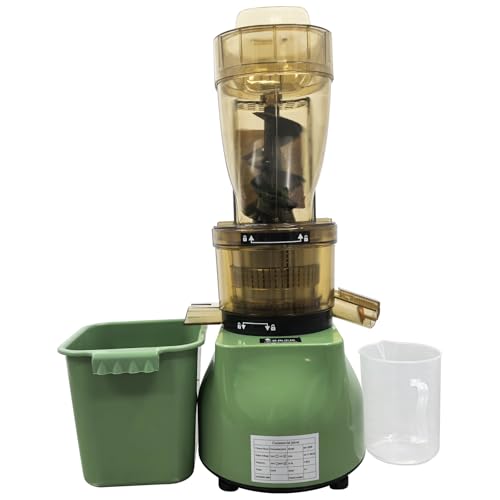
- ✓ Large feeding inlet
- ✓ High juice yield
- ✓ Easy to clean
- ✕ Bulky footprint
- ✕ Noisy operation
| Power | 500 Watts |
| Feeding Inlet Size | Large, capable of whole fruits and vegetables like ginger and carrots |
| Auger Type | Efficient spiral auger for high juice yield and minimal oxidation |
| Filtering Screen | Fine-mesh for smooth, clear juice |
| Rotation Control | Forward and reverse motor control for jam clearing |
| Capacity | Large collection containers with measurement markings for juice and pulp |
Imagine you’re running a busy juice bar, and a rush of customers keeps you on your toes. You toss in whole carrots and chunks of ginger into the large feeding inlet of the Yokoma Commercial Ginger Carrot Juice Extractor.
It gobbles up the produce effortlessly without any pre-cutting, saving you precious time during peak hours.
The spiral auger spins smoothly, crushing the fibrous ingredients with minimal effort. You notice how efficiently it extracts juice, leaving behind dry pulp in the large collection bin.
The fine-mesh filter ensures your juice comes out smooth and clear, perfect for serving in a professional setting.
When a stubborn piece gets stuck, you simply toggle the forward and reverse controls. The quick reversal clears jams instantly, keeping your workflow uninterrupted.
The dual collection system with clear markings helps you measure portions accurately and empty pulp less frequently, which is a huge time-saver in a high-volume environment.
The protective cover adds a layer of safety, preventing foreign objects from entering during operation—peace of mind for busy staff. Overall, the extractor feels sturdy, easy to handle, and designed with commercial use in mind, making it a reliable partner in your daily grind.
However, the size means it takes up some counter space, so you’ll want a dedicated spot. Also, the motor is powerful but can be a bit noisy during operation, which might be a consideration in quieter settings.
What Features Should You Look for in the Best Commercial Carrot Juicer?
When searching for the best commercial carrot juicer, consider the following features:
- Juicing Efficiency: A high-quality commercial carrot juicer should extract maximum juice from carrots with minimal waste. Look for models with powerful motors and effective juicing mechanisms that can handle fibrous vegetables without clogging.
- Durability: Commercial juicers are subjected to heavy use, so materials and build quality are essential. Stainless steel models are often preferred for their longevity and resistance to rust and corrosion, ensuring the juicer can withstand daily demands.
- Ease of Cleaning: The best juicer should allow for quick disassembly and easy cleaning, as hygiene is crucial in a commercial setting. Features like dishwasher-safe components and smooth surfaces can significantly reduce cleaning time and effort.
- Juice Quality: Look for a juicer that preserves the nutrients and flavor of the carrots. Cold press or masticating juicers are often recommended for producing high-quality juice that retains more vitamins and minerals compared to centrifugal juicers.
- Noise Level: In a commercial environment, noise can be an issue. Consider juicers that operate quietly to maintain a pleasant atmosphere for customers and employees, especially during busy hours.
- Versatility: A juicer that can handle a variety of fruits and vegetables in addition to carrots can enhance its utility. Some models come with additional attachments or settings that allow for making nut milks or other juices, providing more options for your menu.
- Size and Capacity: Depending on your business’s volume, choose a juicer with an appropriate feed chute size and juice collection capacity. Larger models can process more carrots at once, which is beneficial for high-demand situations.
- Warranty and Support: A solid warranty indicates the manufacturer’s confidence in their product. Look for juicers with extensive warranties and reliable customer support to ensure you can address any issues that arise quickly.
Why Are Juicing Mechanisms Important for Carrot Juice Quality?
Juicing mechanisms play a crucial role in determining the quality of carrot juice due to several factors:
-
Extraction Efficiency: Different juicers employ distinct mechanisms—centrifugal, masticating, and hydraulic. Masticating juicers, for example, crush and squeeze carrots, yielding a higher volume of juice compared to centrifugal juicers, which may oxidize juice and lose nutrients quickly.
-
Nutrient Retention: Careful extraction minimizes heat and air exposure, preserving vitamins and enzymes. Masticating juicers operate at lower speeds, reducing oxidation and retaining more nutrients, which is essential for the health-conscious consumer.
-
Juice Clarity and Texture: The method of juicing affects the final product’s texture. Hydraulic juicers can provide a smooth, pulp-free juice, appealing to customers seeking a premium product. In contrast, centrifugal juicers often result in a frothy juice due to rapid spinning.
-
Versatility: High-quality juicers can handle various ingredients besides carrots, offering operators flexibility in their product offerings. This versatility allows for the creation of mixed vegetable or fruit juices, attracting a broader customer base.
Choosing the right juicing mechanism ensures superior juice quality, leading to increased customer satisfaction and repeat sales in a commercial environment.
How Does Motor Power Impact the Performance of a Commercial Carrot Juicer?
The motor power significantly influences the performance and efficiency of a commercial carrot juicer.
- Juicing Speed: Higher motor power allows for faster juicing, which is essential in a commercial setting where time is money.
- Juice Yield: A powerful motor can extract more juice from carrots, leading to higher yield and less waste, which is crucial for profitability.
- Durability and Longevity: A robust motor is generally more durable, reducing the likelihood of breakdowns and the need for repairs in a high-demand environment.
- Versatility: More powerful motors can handle tougher materials beyond carrots, enabling the juicer to process a variety of fruits and vegetables efficiently.
- Noise Levels: The performance of the motor can affect noise levels; higher power often results in louder operation, which may be a consideration in a commercial kitchen setting.
Higher motor power allows for faster juicing, which is essential in a commercial setting where time is money. This efficiency can lead to more customers served in a shorter period, enhancing customer satisfaction.
A powerful motor can extract more juice from carrots, leading to higher yield and less waste, which is crucial for profitability. This means that businesses can maximize their return on investment when using a juicer with an efficient motor.
A robust motor is generally more durable, reducing the likelihood of breakdowns and the need for repairs in a high-demand environment. This reliability is vital for commercial operations that cannot afford downtime due to equipment failure.
More powerful motors can handle tougher materials beyond carrots, enabling the juicer to process a variety of fruits and vegetables efficiently. This versatility expands the product offerings that a business can provide, appealing to a broader customer base.
The performance of the motor can affect noise levels; higher power often results in louder operation, which may be a consideration in a commercial kitchen setting. Businesses must balance performance with the comfort of both staff and customers when selecting a juicer.
Why is Juice Yield Crucial for Commercial Operations?
Juice yield is crucial for commercial operations because it directly impacts profitability and operational efficiency. Higher juice yield means that more liquid can be extracted from the same amount of raw produce, which is essential for maximizing revenue and minimizing costs associated with sourcing and processing ingredients.
According to a study published in the Journal of Food Engineering, juice yield can vary significantly based on the type of juicer used, with centrifugal juicers generally providing lower yields compared to cold-press juicers. This difference is particularly notable in carrots, which have a dense structure that benefits from the slow extraction process of cold-press juicers, leading to higher juice yield and better retention of nutrients.
The causal relationship between juicer technology and juice yield is primarily due to how different juicing methods break down the cellular structure of fruits and vegetables. Cold-press juicers apply hydraulic pressure to extract juice without generating excessive heat, which preserves enzymes and nutrients while maximizing the amount of liquid extracted. In contrast, centrifugal juicers utilize high-speed blades that can introduce heat and oxidation, ultimately leading to lower yields and a reduction in juice quality. This illustrates why selecting the best commercial carrot juicer is critical for businesses aiming to optimize both their product offering and financial returns.
What Are the Top Commercial Carrot Juicers Available?
The top commercial carrot juicers available are known for their efficiency, durability, and ability to extract maximum juice with minimal waste.
- Omega NC900HDC: This juicer is a masticating model that operates at a slow speed to preserve nutrients and enzymes. Its dual-stage juicing system ensures high juice yield from carrots and other fruits and vegetables, making it ideal for commercial use.
- Hurom H-AA Slow Juicer: With its sleek design and advanced slow-squeezing technology, the Hurom H-AA is excellent for retaining the natural flavor and nutrients of carrots. It features a fine and coarse strainer, allowing users to choose between different juice textures for various recipes.
- Breville BJE830BSS: This centrifugal juicer is known for its powerful motor and large feed chute, making it suitable for high-volume juicing in commercial settings. The Breville BJE830BSS also has a unique juicing system that maximizes juice extraction while minimizing foam, ensuring a smooth end product.
- Tribest Green Star Elite: A high-quality twin gear juicer, the Tribest Green Star Elite is perfect for extracting juice from fibrous vegetables like carrots. Its innovative gear system crushes and presses the produce, resulting in a superior yield and nutrient retention compared to many other juicers.
- Champion Juicer G5-PG-710: This heavy-duty model is built for durability and efficiency, making it a staple in many commercial kitchens. The Champion juicer features a powerful motor and is capable of juicing a wide variety of produce, including tough carrots, while maintaining a consistent quality of juice.
How Do User Reviews Help Determine the Best Option?
User reviews also clarify the concept of value for money by comparing the performance and features of various juicers against their prices, ensuring that buyers make informed choices. Lastly, insights into customer support experiences can highlight how responsive and helpful manufacturers are, which can influence a buyer’s trust in the brand and its products.
What Are the Key Benefits of Choosing a High-Quality Commercial Carrot Juicer?
The key benefits of choosing a high-quality commercial carrot juicer include efficiency, nutrient retention, durability, and ease of use.
- Efficiency: A high-quality commercial carrot juicer is designed to extract juice quickly and effectively, allowing businesses to serve customers faster. This efficiency is crucial in a busy commercial environment where time and productivity directly impact profitability.
- Nutrient Retention: Premium juicers often utilize cold-press technology or masticating methods that preserve more nutrients and enzymes in the juice. This means that the juice produced is not only tastier but also healthier, appealing to health-conscious consumers.
- Durability: Investing in a high-quality juicer typically means the machine is built to withstand the rigors of daily commercial use. These juicers are often made with robust materials and are designed for longevity, reducing the need for frequent replacements.
- Ease of Use: High-quality commercial juicers are generally user-friendly, with features like easy assembly, simple controls, and straightforward cleaning processes. This convenience allows employees to operate the juicer efficiently and reduces the training time required for new staff.
- Versatility: Many top-rated commercial carrot juicers can handle a variety of fruits and vegetables, not just carrots. This versatility allows businesses to expand their menu offerings, providing customers with a wider range of juice options.
- Quality of Juice: High-quality juicers tend to produce juice with a better texture and flavor, resulting in a superior product that can enhance a brand’s reputation. A smoother and richer juice appeals more to consumers, leading to increased sales and customer satisfaction.
How Can You Ensure Longevity in a Commercial Carrot Juicer?
To ensure longevity in a commercial carrot juicer, several key factors should be considered:
- Quality of Materials: Opt for juicers made from high-grade stainless steel or durable plastics to withstand frequent use.
- Motor Power: A powerful motor is crucial for efficiently juicing tough carrots and extending the machine’s lifespan.
- Regular Maintenance: Establish a routine for cleaning and servicing the juicer to prevent wear and tear and to maintain performance.
- Warranty and Support: Choose a juicer with a comprehensive warranty and reliable customer support for assistance with repairs or replacements.
- Design and Ergonomics: Select a model with a user-friendly design that minimizes strain during operation and ensures ease of use.
Quality of Materials: The durability of a commercial carrot juicer significantly depends on the materials used in its construction. Stainless steel components are resistant to corrosion and wear, while high-quality plastics are less likely to crack or degrade over time, making them ideal for heavy-duty applications.
Motor Power: A robust motor not only enhances the juicer’s efficiency in extracting juice from hard carrots but also helps prevent overheating and burnout during prolonged use. Selecting a juicer with at least a 1 HP motor can provide the necessary power to handle high volumes typical in commercial settings.
Regular Maintenance: Consistent cleaning after each use is vital for maintaining the juicer’s functionality and hygiene. Additionally, periodic checks for wear on parts like blades and strainers can help identify issues before they lead to significant breakdowns.
Warranty and Support: A solid warranty reflects the manufacturer’s confidence in their product and provides peace of mind. Reliable customer support is important for troubleshooting and obtaining replacement parts, which can extend the life of the juicer.
Design and Ergonomics: An ergonomic design ensures that operators can use the juicer comfortably and efficiently without risking injury from repetitive motions. Features like a wide feed chute can make juicing faster and reduce the need for excessive preparation of carrots.
What Common Maintenance Tips Should You Follow?
To ensure the longevity and optimal performance of your commercial carrot juicer, consider the following maintenance tips:
- Regular Cleaning: It’s essential to clean your juicer after each use to prevent buildup of carrot residue and juice.
- Inspect Parts for Wear: Regularly check the blades, strainers, and other components for signs of wear or damage.
- Lubricate Moving Parts: Ensure all moving parts are properly lubricated to reduce friction and wear during operation.
- Check Electrical Components: Routinely inspect the electrical connections and cords for any damage or fraying.
- Follow Manufacturer’s Guidelines: Adhere to the maintenance schedule and recommendations provided in the juicer’s manual.
Regular cleaning is crucial to maintaining the efficiency of your juicer. After each use, thoroughly wash all removable parts with warm soapy water and dry them to prevent any residue from hardening, which can affect juice quality.
Inspecting parts for wear involves examining blades, strainers, and other components for cracks or dullness. Regular checks can prevent unexpected breakdowns and ensure that your juicer operates smoothly and effectively.
Lubricating moving parts like gears and bearings keeps the juicer running quietly and efficiently. Proper lubrication minimizes wear and tear, prolonging the life of the juicer and enhancing its performance.
Checking electrical components is vital for safety and functionality. Inspect cords and plugs for any signs of damage to prevent electrical hazards and ensure the juicer operates safely.
Following the manufacturer’s guidelines ensures that you are performing the necessary maintenance specific to your juicer model. This includes recommended cleaning methods, part replacement intervals, and other best practices to keep your juicer in optimal condition.
Related Post: