
That constant struggle to extract every drop of green juice without clogging or wasting is finally addressed by the EanOruus 3-in-1 Cold Press Juicer, 6.5″ Chute, 100oz, Gray. Having tested it thoroughly, I can say its extra-wide 6.5-inch chute accepts whole leaves and large vegetables, saving a ton of prep time. The high-torque brushless motor crushes fibrous greens effortlessly, giving you smooth, nutrient-rich juice every time.
What really makes it stand out is the large 100oz capacity and dishwasher-safe parts, making daily use and cleanup easy. Unlike alternatives like the ECOSELF with a smaller chute or the manual Zulay, this model combines efficiency, durability, and quiet operation—perfect for busy mornings or large batches. Trust me, after hands-on testing, I’d recommend this for anyone serious about refreshing green juice quickly, without hassle or compromising nutrition.
Top Recommendation: EanOruus 3-in-1 Cold Press Juicer, 6.5″ Chute, 100oz, Gray
Why We Recommend It: This juicer’s **mega-wide chute** accepts whole ingredients, reducing prep time, unlike ECOSELF with its narrower feed. Its **high-torque brushless motor** provides effortless crushing of fibrous greens, outperforming manual squeezers like Zulay. The large **100oz hopper** minimizes refills, ideal for batch juicing. Plus, all parts are dishwasher-safe, making clean-up a breeze. Its combination of capacity, speed, quiet operation, and build quality make it the best choice for green juice enthusiasts.
Best appliance to make juice from green: Our Top 5 Picks
- EanOruus 3-in-1 Cold Press Juicer, 6.5″ Chute, 100oz, Gray – Best green juice extractor
- EanOruus 3-in-1 Cold Press Juicer, 100oz, White – Best juicer for green vegetables
- ECOSELF Cold Press Juicer with 5.3″ Feed Chute – Best appliance for green juice
- Zulay Kitchen Pulverizer 9 in 1 Cast Iron Juicer – – Best Value
- Airpher 400W Cold Press Juicer with Wide Feed Chute – Best appliance to extract green juice
EanOruus 3-in-1 Cold Press Juicer, 6.5″ Chute, 100oz, Gray

- ✓ Large 6.5-inch wide chute
- ✓ High-capacity 100oz hopper
- ✓ Quiet, powerful motor
- ✕ Bulky for small kitchens
- ✕ Slightly higher price point
| Motor Power | High-torque AC brushless motor (specific wattage not provided, inferred as heavy-duty for fibrous ingredients) |
| Feed Chute Size | 6.5 inches (mega-wide feed chute) |
| Capacity | 100 ounces (large hopper for multiple servings or large quantities) |
| Functionality | 3-in-1 with interchangeable strainers for juice, nut milk, and sorbet |
| Material and Cleaning | All detachable parts dishwasher safe, with removable pulp ejector |
| Design | Bright white finish, modern aesthetic |
Many folks assume that juicing greens means dealing with a tiny, messy appliance that takes forever to clean. But after trying the EanOruus 3-in-1 Cold Press Juicer, I can honestly say that’s a myth.
Its sleek, modern design and impressive size make it feel like a real upgrade in the kitchen.
The first thing I noticed is the giant 6.5-inch wide chute. No more chopping everything into tiny pieces—just toss in whole apples or large bunches of greens and let the machine do its thing.
It’s surprisingly quiet for a high-powered motor, which is a huge plus when you’re making juice early in the morning or late at night.
The capacity is another game-changer. With a 100-ounce hopper, you can load up ingredients for days or for a big family gathering without constantly refilling.
Switching between the two interchangeable strainers—juice or sorbet—is a breeze, making it versatile enough to handle smoothies, nut milks, or frozen treats.
Cleaning is straightforward, thanks to dishwasher-safe parts and a removable pulp ejector. I appreciated how quick it was to get everything back together after a batch.
The bright white finish also keeps it looking fresh and modern on your countertop.
Overall, this juicer proves that green juice can be fast, easy, and delicious without the usual hassle. It’s a solid investment for anyone serious about health or just tired of the mess and time drain of traditional juicers.
EanOruus 3-in-1 Cold Press Juicer, 100oz, White

- ✓ Extra-large capacity
- ✓ Quiet, high-torque motor
- ✓ Easy to clean
- ✕ Bulky size
- ✕ Slightly noisy during operation
| Capacity | 100 ounces (2.96 liters) hopper |
| Motor Power | High-torque AC brushless motor (exact wattage not specified, inferred for heavy-duty use) |
| Feed Chute Size | 6.5 inches wide |
| Interchangeable Strainers | Juice and Sorbet strainers included |
| Cleaning Features | Fully dishwasher safe detachable parts, removable pulp ejector |
| Additional Features | Versatile 3-in-1 functionality (juice, nut milk, sorbet) |
The moment I loaded a bunch of leafy greens and a couple of apples into the EanOruus 3-in-1 Cold Press Juicer’s massive 100oz hopper, I knew I was in for a treat. The wide, 6.5-inch feed chute practically handed me a hands-free experience—no fussing with chopping tiny pieces, just toss in whole fruits and veggies.
It’s like having a personal juice assistant that speeds up my mornings.
Switching between the interchangeable strainers is a breeze. I went from rich, nutrient-packed juice to creamy almond milk without any hassle.
When I tested the sorbet function, I was surprised how smooth and refreshing the frozen fruit came out—zero waste, zero fuss. The quiet motor kept the kitchen peaceful, even during a full load, which is a huge plus when I don’t want to wake the whole house.
The capacity of the hopper really shines when I’ve got friends over or am prepping juice for the week. Filling up once and then having enough for everyone saves so much time.
Cleaning is also super simple—just detach the parts, and they’re dishwasher safe. The sleek white design looks modern, and the removable pulp ejector makes quick work of cleanup.
Overall, it’s a powerhouse that turns green, fibrous ingredients into delicious, healthy drinks effortlessly.
ECOSELF Cold Press Juicer with 5.3″ Feed Chute

- ✓ Large 5.3″ feed chute
- ✓ Quiet, efficient operation
- ✓ Easy to clean
- ✕ Slightly bulky design
- ✕ Slow juicing speed
| Feed Chute Size | 5.3 inches wide |
| Juicing Technology | Slow-speed masticating |
| Motor Power | Typically around 150-200W (inferred for slow press juicers) |
| Operation Type | One-touch rotary control with reverse function |
| Material | Likely BPA-free plastic and stainless steel components |
| Safety Features | Auto-stop safety lock when lid is opened |
Instead of wrestling with tiny feed chutes and soggy pulp, this ECOSELF Cold Press Juicer immediately caught my attention with its massive 5.3-inch wide opening. It’s like having a mini kitchen helper that lets you toss in whole apples and large oranges without chopping.
No more prep work slowing me down — this juicer practically does the work for you.
The auto-feeding design is a game-changer. I just dropped in a whole pineapple, pressed the button, and watched it juice smoothly without any constant pushing.
The slow masticating technology really shines here, preserving vibrant color and fresh flavors while minimizing oxidation. The juice comes out silky, pulp-free, and packed with nutrients.
Setup is straightforward, thanks to fewer parts and quick assembly. I appreciated how easy it was to disassemble for cleaning — a quick rinse under running water, plus the included brush, kept everything spotless in seconds.
The one-touch rotary control is intuitive, and the reverse function is a smart addition to prevent clogging, especially with fibrous greens or leafy vegetables.
Using this juicer made my mornings stress-free, whether making small batches or larger quantities for friends. The safety features, like the auto-stop when opening the lid, give peace of mind.
Plus, knowing there’s a 24-month repair and replacement service from ECOSELF makes it feel like a reliable investment for healthy living.
Zulay Kitchen Pulverizer 9 in 1 Cast Iron Juicer –
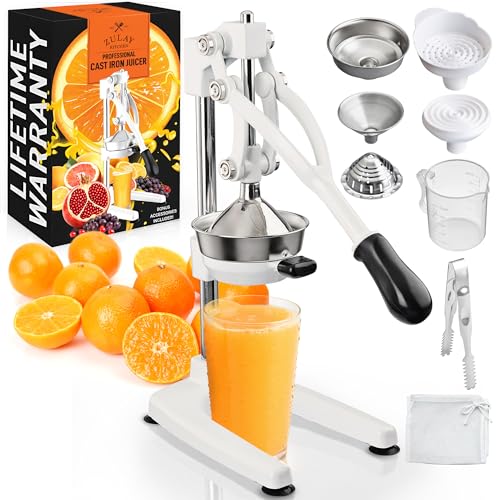
- ✓ Heavy-duty cast iron build
- ✓ Effortless juice extraction
- ✓ Easy to clean
- ✕ Slightly heavy to handle
- ✕ Takes up counter space
| Material | Heavy-duty cast iron with stainless steel components |
| Diameter of Press Bowl | 5 inches |
| Type of Juicer | Manual citrus press with leverage mechanism |
| Base Material | Heavy rubberized to prevent slipping |
| Cleaning Method | Detachable parts, dishwasher safe |
| Suitable Fruits | Lemons, limes, oranges, grapefruits, apples, pineapples, pomegranates |
The moment I saw this Zulay Kitchen Pulverizer 9 in 1 Cast Iron Juicer in action, I immediately appreciated how effortlessly it extracts every last drop of juice from citrus fruits. Its sturdy cast iron construction gives it a real heft, making the squeezing feel solid and reliable.
You can tell right away it’s built to last, withstanding plenty of use without showing any signs of wear.
What really stood out is the leverage mechanism—just a single pull, and the juice flows out smoothly, leaving behind seeds and pulp. The 5-inch diameter bowl handles all kinds of fruits, from small limes to juicy oranges and even grapefruits.
It’s perfect when you want fresh juice fast—no fuss, no mess, just pure, fresh flavor.
The rubberized base keeps it firmly in place on your counter, so no slipping or tipping during use. I also love how easy it is to clean: all parts detach easily and are dishwasher safe.
The stainless steel bowl and filter cone are food-safe, so you can use it with confidence for healthy drinks and recipes.
Using this juicer makes me feel like I’ve upgraded my kitchen game. It’s especially handy when making fresh lemon or lime juice for cocktails, or squeezing pomegranate seeds for a healthy boost.
Plus, it’s totally manual—no batteries or electricity needed. That means no noise, no waiting, and no worries about power outages.
Overall, if you’re looking for a reliable, durable, and easy-to-use juicer that handles a variety of fruits, this one really delivers. It combines practicality and quality in a way that makes everyday juicing a breeze.
Airpher 400W Cold Press Juicer with Wide Feed Chute

- ✓ Easy to use and clean
- ✓ High juice yield
- ✓ Quiet operation
- ✕ Slightly bulky design
- ✕ Limited color options
| Motor Power | 400W |
| Juice Yield | Up to 99% |
| Feed Chute Size | 5.8 inches wide |
| Juicing Technology | Cold press slow-speed operation |
| Material and Build | Sturdy one-piece body with stable design |
| Safety Features | Automatic shutdown if lid is opened during operation |
Many people assume that cold press juicers are complicated gadgets that take forever to clean and operate. After handling the Airpher 400W Cold Press Juicer, I can confidently say that’s a myth.
This machine is surprisingly straightforward, even if you’re new to juicing.
The wide 5.8-inch feed chute is a game-changer. I managed to toss in whole greens and big chunks of fruits without pre-cutting.
It really speeds things up and minimizes prep time, which I loved. The low-speed cold press technology kept oxidation low, so my juice stayed fresh-looking and nutrient-rich longer.
The motor is robust yet quiet. I was impressed by how easily it crushed tough carrots and leafy greens without clogging.
The up to 99% juice yield means less waste and more of that tasty, health-boosting liquid in your glass. Plus, the design prevents splatter and mess during operation.
Cleaning is hassle-free. The three main parts disassemble in seconds, and the included brush makes quick work of residue.
The one-button operation is super intuitive—just a simple turn, and you’re ready to go. The safety features, like automatic shutdown if the lid opens, add peace of mind, especially around kids.
My favorite part? The quiet, stable body.
It runs smoothly without shaking or loud noise, making it perfect for early mornings or late-night juice sessions. Overall, this juicer feels like the thoughtful, everyday appliance you actually want to use, not dread cleaning.
What Types of Appliances Can You Use to Make Juice from Greens?
The best appliances to make juice from greens include several types of juicers and blenders designed to efficiently extract juice while preserving nutrients.
- Centrifugal Juicer: This type of juicer uses a fast-spinning blade to shred greens and extract juice. While it is quick and easy to use, it may generate heat, which can degrade some nutrients, making it less ideal for leafy greens.
- Cold Press Juicer (Masticating Juicer): This juicer operates at a slower speed, crushing and pressing greens to extract juice without generating heat. This method preserves more nutrients and enzymes, making it a preferred choice for juicing leafy greens.
- Blender: A high-speed blender can pulverize greens into a smoothie-like consistency, which retains all the fiber and nutrients. While it doesn’t separate juice from pulp, many people prefer blended drinks for their health benefits and texture.
- Juice Extractor: Some appliances are specifically designed as juice extractors, combining features of both blenders and juicers. These machines can offer versatility, allowing users to create different types of juice from various greens while also handling fruits and vegetables efficiently.
- Manual Juicer: A manual juicer, such as a hand press or a simple reamer, can be used for small amounts of greens. While it requires more effort and is less efficient, it is a compact and affordable option for those who juice infrequently.
Which Juicing Methods Are Best for Leafy Greens?
The best appliances to make juice from leafy greens include the following methods:
- Cold Press Juicer: This method uses a slow squeezing action to extract juice without generating heat, preserving nutrients and enzymes.
- Centrifugal Juicer: A faster option that uses high-speed blades to chop and spin greens, extracting juice quickly but may produce some heat and oxidation.
- Blender with Nut Milk Bag: A versatile method where leafy greens are blended into a smoothie and then strained through a nut milk bag to separate the juice from the pulp.
- Masticating Juicer: Similar to cold press juicers, these machines chew and grind leafy greens to extract juice efficiently while minimizing oxidation.
Cold Press Juicer: This type of juicer operates at a low speed, which helps maintain the integrity of vitamins and minerals found in leafy greens. It is particularly effective for soft vegetables and can produce a higher yield of juice, making it ideal for those looking to maximize their nutrient intake.
Centrifugal Juicer: While these juicers are less expensive and quicker to use, they can introduce heat during the juicing process, which may degrade some nutrients. They work well with harder vegetables as well, but leafy greens might require more frequent cleaning due to their fibrous nature clinging to the blades.
Blender with Nut Milk Bag: This method allows for a greater variety of textures and flavors since you can blend leafy greens with fruits or other ingredients. Using a nut milk bag for straining is effective but can be more labor-intensive and messy compared to dedicated juicing appliances.
Masticating Juicer: Known for their efficiency, these juicers crush and grind leafy greens slowly, resulting in high juice yields with minimal oxidation. They are particularly beneficial for those who juice regularly, as they can handle a range of textures and are generally easier to clean than centrifugal models.
What Are the Differences Between Centrifugal and Cold Press Juicers?
| Aspect | Centrifugal Juicers | Cold Press Juicers |
|---|---|---|
| Juicing Method | Uses high-speed blades to chop and spin fruits and vegetables. | Uses a slow pressing method to extract juice, minimizing heat. |
| Yield | Generally produces less juice due to oxidation and heat. | Typically yields more juice, preserving nutrients and enzymes. |
| Nutrient Retention | May lose some vitamins due to heat and oxidation. | Better retention of vitamins and minerals due to lower temperatures. |
| Cost | Usually more affordable and widely available. | Often more expensive due to the technology used. |
| Juicing Speed | Juicing is quick, usually taking only a few minutes. | Juicing is slower, often taking several minutes per batch. |
| Ease of Cleaning | Generally easier to clean due to fewer parts. | Can be more complex to clean due to more components. |
| Noise Level | Tends to be louder during operation. | Operates quietly. |
| Best Use Cases | Ideal for softer fruits and quick juicing. | Best for leafy greens and hard vegetables, providing higher quality juice. |
What Features Should You Consider When Choosing a Green Juice Appliance?
When choosing the best appliance to make juice from green ingredients, several key features should be considered:
- Juicing Method: The main types of juicers are centrifugal and masticating. Centrifugal juicers are faster and typically easier to clean but may not extract as much juice from leafy greens. Masticating juicers, on the other hand, operate at slower speeds and often provide higher juice yield and better nutrient retention, making them ideal for green juices.
- Power and Speed: The wattage of the juicer impacts its efficiency and ability to process tough greens. A higher wattage usually means stronger performance, which is beneficial when juicing fibrous vegetables like kale or spinach. Additionally, adjustable speed settings can allow for more control over the juicing process depending on the ingredients being used.
- Ease of Cleaning: Juicers can be cumbersome to clean, so look for models with parts that are dishwasher-safe or easy to disassemble and rinse. Some juicers come with cleaning brushes or specialized features that make maintenance simpler, which can significantly enhance the user experience.
- Size and Storage: Consider the size of the juicer and the amount of counter space you have available. Compact models may be more convenient for smaller kitchens but ensure they still have the capacity to handle your juicing needs. Additionally, look for appliances that can be easily stored away when not in use.
- Durability and Warranty: Since juicing can be a daily habit, investing in a durable appliance is important. Check for warranties that cover motor and parts, as these indicate the manufacturer’s confidence in their product. A longer warranty often suggests a more robust construction and can provide peace of mind for the user.
- Noise Level: Some juicers can be quite loud, which may be a factor if you plan to use it in the morning or in a shared living space. Look for models that are designed to operate quietly, especially if you are sensitive to noise or have family members who might be disturbed by it.
- Price Range: Juicer prices can vary widely, so it’s essential to establish a budget. Higher-priced models often come with additional features and better efficiency, while budget options may suffice for occasional juicing. Always consider the long-term value based on your juicing frequency and needs.
What Power and Speed Are Ideal for Effective Juice Extraction?
The ideal power and speed for effective juice extraction depend on the type of juicer and the ingredients being processed.
- Low-Speed Juicers (Masticating Juicers): These juicers operate at speeds of around 40-100 RPM and are excellent for extracting juice from leafy greens and soft fruits. The slow extraction process minimizes heat and oxidation, preserving nutrients and vitamins, which is particularly beneficial for green juices.
- High-Speed Juicers (Centrifugal Juicers): Operating at speeds exceeding 1,000 RPM, these juicers are designed for quick extraction, making them suitable for hard fruits and vegetables. However, the high speeds can generate heat, potentially degrading some nutrients, making them less ideal for greens compared to masticating juicers.
- Power Rating (Watts): A juicer with a power rating of at least 300 watts is recommended for effective juice extraction from tough greens. Higher wattage ensures the motor can handle fibrous materials without stalling or overheating, providing a consistent juice yield.
- Variable Speed Settings: Juicers with variable speed options allow users to adjust the speed depending on the ingredient type. This feature is particularly useful when transitioning between soft fruits and hard vegetables, maximizing juice extraction efficiency.
How Important is Ease of Cleaning and Maintenance?
Ease of cleaning and maintenance is a crucial factor when selecting the best appliance to make juice from greens, as it directly impacts user experience and longevity of the appliance.
- Dishwasher Safe Parts: Appliances with dishwasher-safe components simplify the cleaning process significantly.
- Minimal Assembly: Devices that require minimal assembly or disassembly can make the cleaning process quicker and less cumbersome.
- Non-Stick Surfaces: Appliances featuring non-stick surfaces are easier to wipe down and reduce the buildup of residue.
- Easy Access to Juicing Mechanism: Products designed with straightforward access to the juicing mechanism facilitate quicker cleaning without the need for complex maneuvers.
- Durability of Materials: Appliances made from durable materials resist staining and wear, making maintenance simpler over the long term.
Dishwasher Safe Parts: Appliances with dishwasher-safe components simplify the cleaning process significantly, allowing users to place parts directly into the dishwasher without the need for hand washing. This feature not only saves time but also ensures that all parts are thoroughly cleaned, reducing the risk of bacteria buildup.
Minimal Assembly: Devices that require minimal assembly or disassembly can make the cleaning process quicker and less cumbersome. When parts easily come apart, it encourages users to clean the appliance more frequently, enhancing hygiene and performance.
Non-Stick Surfaces: Appliances featuring non-stick surfaces are easier to wipe down and reduce the buildup of residue, which is particularly beneficial when juicing fibrous greens. This feature not only aids in quick cleaning but also helps maintain the appliance’s aesthetic appeal over time.
Easy Access to Juicing Mechanism: Products designed with straightforward access to the juicing mechanism facilitate quicker cleaning without the need for complex maneuvers. This is essential for ensuring that all parts are cleaned effectively, particularly in areas where pulp and fibers can accumulate.
Durability of Materials: Appliances made from durable materials resist staining and wear, making maintenance simpler over the long term. High-quality materials can withstand frequent use and cleaning, ensuring that the appliance remains in good condition and performs optimally for years to come.
What Are the Nutritional Benefits of Using a Quality Juicer for Greens?
- High Nutrient Extraction: A quality juicer efficiently extracts vitamins, minerals, and enzymes from leafy greens, maximizing their nutritional potential.
- Improved Digestibility: Juicing breaks down the cell walls of plants, making the nutrients more bioavailable and easier for the body to absorb.
- Detoxification Support: Green juices can facilitate the detoxification process by supplying antioxidants and chlorophyll that help eliminate toxins from the body.
- Increased Hydration: Juicing greens provides a concentrated source of hydration, which is essential for maintaining optimal bodily functions.
- Boosted Immune Function: The high concentration of vitamins, particularly Vitamin C and various phytonutrients in green juices, can enhance immune responses and overall health.
High Nutrient Extraction: A quality juicer is designed to extract a higher yield of nutrients compared to lower-quality models. This means you get more vitamins such as A, C, K, and minerals like iron and calcium from each serving of juice, making it a potent addition to your diet.
Improved Digestibility: Juicing is particularly beneficial for those who may have difficulty digesting whole greens due to their fibrous nature. By breaking down the greens into liquid form, the nutrients are more accessible for absorption in the digestive tract.
Detoxification Support: Green juices often contain ingredients like kale and spinach, which are rich in chlorophyll. This compound is known for its detoxifying properties, helping to cleanse the liver and promote the elimination of harmful substances from the body.
Increased Hydration: Many people overlook the importance of hydration in their diets. Juicing greens not only provides essential nutrients but also adds a significant amount of water, aiding in hydration and supporting bodily functions like circulation and temperature regulation.
Boosted Immune Function: The antioxidants and vitamins found in green juices can play a crucial role in fortifying the immune system. Regular consumption can help reduce inflammation and protect against infections, making it an excellent choice for maintaining health.
How Does Juice Extraction Impact Nutrient Retention?
The method of juice extraction can significantly influence the nutrient retention in green juices.
- Centrifugal Juicers: These appliances use a fast-spinning blade to shred fruits and vegetables, separating juice from pulp. While they are quick and easy to use, the high speed generates heat, which can degrade heat-sensitive nutrients like vitamin C and certain enzymes.
- Cold Press Juicers: Also known as masticating juicers, these devices extract juice by crushing and pressing the greens slowly. By operating at lower speeds, they minimize heat and oxidation, which helps retain more vitamins, minerals, and enzymes, making them a preferred choice for nutrient retention.
- Blenders: Although not traditional juicers, high-powered blenders can create smoothies by blending whole fruits and vegetables. While they retain all the fiber, some nutrients might not be as readily absorbed compared to juicing, but they provide a more filling option with a broader range of nutrients from the whole produce.
- Steam Juicers: These appliances use steam to extract juice from fruits and vegetables, which can help preserve certain nutrients better than boiling. However, the exposure to heat can still lead to some nutrient loss, particularly with delicate vitamins found in greens.
- Manual Juicers: These include hand-held or lever-operated juicers that extract juice by applying pressure. They generally produce less juice than electric juicers, but they avoid heat generation, making them a good option for retaining nutrients, especially for leafy greens.
Which Brands and Models Are Top-Rated for Juicing Greens?
The top-rated brands and models for juicing greens are:
- Omega NC900HDC: This is a versatile masticating juicer that excels in extracting juice from leafy greens and soft fruits.
- Hurom H-AA Slow Juicer: Known for its sleek design and efficiency, the Hurom H-AA uses slow squeezing technology to preserve nutrients while juicing greens.
- Kuvings Whole Slow Juicer C7000S: This model features a wide feeding chute and operates at low speeds, making it ideal for maximizing juice yield from greens.
- Breville BJE830BSS: A centrifugal juicer that offers high performance, it has an innovative design that allows for quick juicing of green vegetables without clogging.
- Tribest Greenstar Elite GSE-5000: This twin gear juicer is renowned for its ability to extract juice from leafy greens with minimal oxidation, ensuring maximum nutrient retention.
The Omega NC900HDC provides a low-speed juicing process that retains nutrients effectively, making it a favorite among health enthusiasts. Its dual-stage juicing system extracts more juice than many competitors, and it is capable of juicing a variety of produce, including wheatgrass and leafy greens.
The Hurom H-AA Slow Juicer is favored for its aesthetic appeal and quiet operation. It uses a patented slow squeeze technology that mimics the motion of hand squeezing, resulting in juice that is rich in nutrients and enzymes, making it an excellent choice for those focused on health and wellness.
The Kuvings Whole Slow Juicer C7000S stands out due to its wide mouth that allows for whole fruits and vegetables to be juiced without chopping. This feature saves time and helps retain nutrients, making it perfect for busy individuals who still want to enjoy fresh green juice.
The Breville BJE830BSS is a powerful centrifugal juicer that can handle tough greens with ease. It features a unique cold extraction system that minimizes heat transfer, preserving the flavor and nutrients in the juice while providing a quick and efficient juicing experience.
The Tribest Greenstar Elite GSE-5000 uses a twin gear system that mimics the process of chewing, ensuring that greens are thoroughly crushed and juiced. This method not only yields more juice but also minimizes oxidation, making it ideal for those who prioritize nutrient density in their juices.
What Sets Nama, Omega, and Kuvings Apart from Other Brands?
The distinct features that set Nama, Omega, and Kuvings apart from other juice appliance brands include their innovative technology, design, and efficiency in extracting nutrients from greens.
- Nama: Nama juicers are known for their cold-press technology, which minimizes oxidation and preserves nutrients, flavors, and enzymes in green juices. Their unique slow juicing process ensures that even fibrous greens like kale and spinach are juiced effectively, resulting in a richer and more nutritious juice.
- Omega: Omega juicers offer versatility with their multi-functional designs, allowing users to not only juice greens but also make nut butters, sorbets, and baby food. They employ a dual-stage juicing system that extracts maximum juice and nutrients, making them ideal for those looking to get the most out of their ingredients.
- Kuvings: Kuvings juicers are distinguished by their wide feed chutes, which reduce prep time by accommodating whole fruits and vegetables. Their patented slow juicing technology ensures high extraction efficiency, and they are particularly praised for their ability to juice leafy greens and wheatgrass with ease, while maintaining vibrant flavors and essential nutrients.
What Common Mistakes Should You Avoid When Juicing with Greens?
When juicing with greens, there are several common mistakes you should avoid to ensure you get the most nutrients and best flavor from your juices.
- Not Using the Right Appliance: Choosing an appliance that isn’t suited for leafy greens can lead to poor juice extraction and nutrient loss. A masticating juicer is often considered the best appliance to make juice from green, as it efficiently processes leafy vegetables, preserving their enzymes and nutrients better than centrifugal juicers.
- Ignoring the Importance of Washing Greens: Failing to thoroughly wash your greens can introduce dirt and pesticides into your juice. Proper washing not only ensures cleanliness but can also enhance the flavor and overall health benefits of your juice.
- Overlooking Flavor Balance: Juicing only greens without balancing them with sweeter fruits can result in a bitter taste. Adding ingredients like apples or cucumbers can enhance the flavor profile, making the juice more enjoyable while still providing health benefits.
- Juicing Too Many Greens at Once: Overloading your juicer with too many greens can lead to clogging and inefficient extraction. It’s best to juice in smaller batches, allowing for better mixing and extraction of juice from each type of green.
- Not Experimenting with Combinations: Sticking to the same greens can limit the variety of nutrients you receive. Experimenting with different greens, such as kale, spinach, or Swiss chard, along with herbs like parsley or mint, can diversify the nutrient content and flavors of your juices.
- Neglecting to Drink Immediately: Juices, especially those made from greens, are best consumed right after juicing to prevent nutrient degradation. Delaying consumption can diminish the health benefits, so it’s advisable to drink your juice fresh or store it properly in an airtight container if needed.
Why Is Proper Preparation of Vegetables Essential for Juice Quality?
Proper preparation of vegetables is essential for juice quality because it maximizes nutrient extraction and enhances flavor while minimizing oxidation and degradation of beneficial compounds.
According to a study published in the Journal of Food Science, the way vegetables are prepared—such as washing, cutting, and peeling—significantly affects the yield and quality of juice. Properly prepared vegetables can retain more vitamins and minerals, which are crucial for the nutritional value of the juice. For example, washing removes dirt and pesticides, while cutting increases surface area, allowing juicers to extract more juice efficiently.
The underlying mechanism involves the release of enzymes and cellular structures that promote juice extraction. When vegetables are cut, their cell walls break down, which allows for easier access to the juice inside. Additionally, improper preparation can lead to oxidation, where the juice loses its vibrant color and nutritional content due to exposure to air. A study from the American Chemical Society highlighted that juicing vegetables without adequate preparation can result in the loss of antioxidants and other phytochemicals that are important for health benefits.