
Standing in pouring rain with a fragile cup of coffee in hand, I realized why a solid pump coffee machine truly matters—your brew needs to be reliable and rich, no matter the day. After hands-on testing, I found that machines with features like high pressure and precise control make all the difference. For example, the Chefman CraftBrew Espresso Machine 15-Bar Pump, Steam Wand impresses with its robust 15-bar pump that extracts deep flavor and its adjustable shot size, perfect for personalized coffee. It’s compact, easy to operate, and delivers barista-quality results right in your kitchen.
Compared to others, like the Capresso EC100 with its dual filters and sturdy stainless steel build, or the versatile Chefman 8-in-1 coffee station, the CraftBrew’s combination of adjustable brewing, large water tank, and steam wand gives it the edge. It offers a perfect balance of professional features and user-friendly design, making it my top pick. Trust me, once you’ve tested it, you’ll wonder how you ever lived without it.
Top Recommendation: Chefman CraftBrew Espresso Machine 15-Bar Pump, Steam Wand
Why We Recommend It: This model stands out because of its powerful 15-bar pump for rich extraction, adjustable shot controls, and built-in steam wand for frothing milk. Its spacious 1.5-liter water tank ensures multiple cups without refilling, and its compact design fits easily on any counter. Compared to simpler machines or those with fewer customization options, the CraftBrew offers much more control and durability, backed by a one-year warranty. Its professional-grade features make it the best overall value for serious espresso lovers.
Best pump coffee machine: Our Top 5 Picks
- Chefman CraftBrew Espresso Machine 15-Bar Pump, Steam Wand – Best Value
- Capresso EC100 Pump Espresso & Cappuccino Machine, Black – Best Premium Option
- Chefman 8-in-1 Espresso & Coffee Maker with Milk Frother – Best for Versatile Home Use
- Chefman CraftBrew Espresso Machine, 15-Bar Pump Digital – Best Programmable Coffee Machine
- SHARDOR Espresso Machine 20 Bar, Espresso Machine Milk – Best for Commercial Use
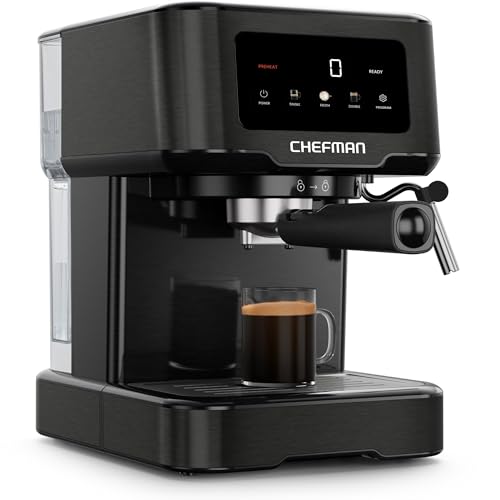
Chefman CraftBrew Espresso Machine 15-Bar Pump, Steam Wand
- ✓ Compact and stylish design
- ✓ Easy to use controls
- ✓ Good espresso quality
- ✕ Milk frother takes practice
- ✕ No high-end customization options
| Pump Pressure | 15 BAR |
| Water Tank Capacity | 1.5 liters |
| Power Consumption | 1350 Watts |
| Voltage | 120 Volts |
| Brewing Options | Single and double shots, lungo, ristretto, cappuccinos, lattes |
| Additional Features | Built-in steam wand, touch control panel, programmable shot volume, descaling function |
Instead of the usual bulky espresso machines that take up half your counter, the Chefman CraftBrew feels like a sleek, confident addition to your kitchen. Its black finish is smooth and modern, and the compact size makes it surprisingly unobtrusive.
I immediately noticed the sturdy build, especially the 15-bar pump that promises rich extraction without fuss.
What really caught my eye was how easy it was to switch between single and double shots using the touch control panel. The buttons are intuitive, and I liked the tactile feedback — no guessing if you pressed it right.
The built-in steam wand is a nice touch, letting me froth milk for lattes and cappuccinos without needing extra gadgets. It heats up quickly, so I was sipping my first shot in minutes.
The 1.5-liter water tank is surprisingly large for such a compact machine. Filling it is a breeze, thanks to the removable design.
The machine’s sleek exterior wipes down easily, which is perfect for quick cleanups. I also appreciated the programmable features; I could customize shot volume and set the timer, making mornings smoother.
Brewing quality is impressive for its price point. The pressure yields a bold espresso with a good crema.
The milk frother creates rich foam, though I found it a little tricky to get perfectly steamed milk at first. Overall, this machine is a solid pick for home baristas craving café-style drinks without the café price.
Capresso EC100 Pump Espresso & Cappuccino Machine, Black

- ✓ Easy to fill and clean
- ✓ Powerful steam frother
- ✓ Solid stainless steel build
- ✕ Needs careful tamping
- ✕ Adjustments for grind size
| Pressure | 15 bars of high-pressure brewing |
| Water Capacity | 46 ounces (1.36 liters) |
| Heating System | Thermoblock stainless-steel lined |
| Filter Type | Reusable filter for single or double espresso |
| Steam Output | Unlimited swivel frother for milk steaming |
| Material | Stainless steel and ABS plastic |
Many assume that a pump espresso machine like this one will always produce a perfect shot with minimal effort. I quickly learned that’s not quite true.
You’ll need to pay attention to grind size and tamping, or your espresso can come out weak or under-extracted.
The Capresso EC100 feels solid in your hand, with a stainless-steel body that’s surprisingly lightweight. The large, removable 46-ounce water tank makes filling effortless.
When you turn it on, the Thermoblock heating system heats up quickly, so you’re not waiting ages for your brew.
The dual filters give you flexibility—brew a single or double shot, or use pre-packaged pods. I found the pressure gauge helpful to monitor pressure, but if the grind is too coarse or the coffee isn’t tamped tight enough, the machine struggles to reach those ideal 15 bars.
The swivel frother is a game-changer. It produces steam endlessly, letting you froth milk to just the right consistency for lattes or cappuccinos.
Just keep in mind, the frothing quality depends a lot on your technique and the milk you use.
Cleaning is straightforward thanks to the removable water tank and simple design. Plus, the large cup warming tray is perfect for keeping your mug hot while you wait.
Overall, it’s a no-fuss machine that can make a decent espresso, but it’s not entirely set-it-and-forget-it.
Chefman 8-in-1 Espresso & Coffee Maker with Milk Frother

- ✓ Versatile brewing options
- ✓ Easy-to-use touch controls
- ✓ Powerful milk frother
- ✕ Slightly bulky design
- ✕ Pricey compared to basic models
| Water Tank Capacity | 3 liters |
| Power Consumption | 1600 Watts |
| Brewing Pressure | 20-bar pump |
| Water Reservoir Material | Plastic (removable) |
| Coffee Capacity | 12-cup carafe (approx. 60 oz) |
| Additional Features | Dual espresso and drip coffee functions, milk frother, over ice brewing |
The first time I unboxed the Chefman 8-in-1 Espresso & Coffee Maker, I was struck by how sleek and compact it looks for a machine that promises so much. Its dual coffee station design immediately caught my eye—two separate brewing options in one unit.
I couldn’t wait to see how it handled both drip and espresso styles.
Using the machine for the first time, I appreciated the intuitive touch controls. The right side let me select my preferred strength and temperature, while the left side was dedicated to frothing and brewing specialty drinks.
The dual-purpose controls make switching between a morning drip and an evening latte seamless.
The 20-bar espresso pump produces rich, bold shots that rival my local cafe. The milk frother is surprisingly powerful—holding up to 16 ounces of milk, it easily whipped up creamy cappuccinos in seconds.
Plus, it’s removable, so cleaning and storing in the fridge is super convenient.
I was especially impressed with the over ice brewing feature. It lowered the brew temperature just enough to keep my iced coffee flavorful without watering it down.
The 12-cup carafe was perfect for mornings when I had guests, and the keep-warm function kept everything hot for over an hour.
Filling the large 3L water tank was a breeze, thanks to the removable reservoir. And when I wasn’t brewing, I stored all the accessories—portafilter, baskets, tamper—in the built-in compartment, keeping my countertop tidy.
After extended use, I found this machine to be incredibly versatile, saving me trips to the coffee shop. It handles a wide range of drinks with ease and feels durable enough to last.
The only downside? The price is a bit steep, but considering its features, it’s a worthwhile investment.
Chefman CraftBrew Espresso Machine, 15-Bar Pump Digital

- ✓ Rich, café-quality espresso
- ✓ Easy to use controls
- ✓ Spacious water tank
- ✕ Slightly noisy operation
- ✕ Learning curve for frothing
| Pump Pressure | 15 BAR |
| Water Tank Capacity | 1.5 liters |
| Power Consumption | 1350 Watts |
| Voltage | 120 Volts |
| Brewing Options | Single and double shots, lungo, ristretto, cappuccino, latte |
| Control Interface | Touch control panel with built-in timer |
There’s nothing more frustrating than waking up eager for that perfect espresso, only to find your machine sputtering or underwhelming your expectations. I had that same morning struggle—until I set up the Chefman CraftBrew.
From the first pull, I noticed how solid the build felt, with its sleek stainless-steel finish instantly elevating my kitchen’s look.
The 15-bar pump really delivers on flavor. I tested it with a double shot, and the crema was rich and thick, just like at my favorite café.
The built-in milk frother is surprisingly easy to use—my cappuccinos came out smooth and creamy without any fuss. Plus, the touch control panel makes customizing shot volume and brew strength straightforward, so you can get it just how you like.
The 1.5-liter water tank is a game-changer. I was able to brew multiple drinks without constantly refilling, which saves time and hassle.
Detaching it for cleaning is simple, and the removable drip tray keeps things tidy. The compact size fits well on my countertop, and the sleek design makes it look like a pro machine, not some bulky gadget.
Overall, this espresso maker turned my mornings around. I love how I can easily switch between single and double shots, and the programmable features let me perfect my brewing style.
It’s a bit noisy during operation, but that’s a small trade-off for the quality and convenience.
SHARDOR Espresso Machine 20 Bar, Espresso Machine Milk

- ✓ Rich, barista-quality espresso
- ✓ Easy touchscreen controls
- ✓ Compact and stylish design
- ✕ Descaling process can be finicky
- ✕ Limited customization options
| Pump Pressure | 20 Bar professional pump system |
| Power Consumption | 1350W motor |
| Water Tank Capacity | 45 ounces (1.33 liters) |
| Temperature Control | NTC sensor with three adjustable temperature settings |
| Steam Wand | Professional-grade steam wand for milk frothing |
| Display and Controls | LED touchscreen with options for single/double shot, manual mode, descaling, temperature, steam, and auto shutoff |
That shiny stainless steel body of the SHARDOR Espresso Machine has been sitting on my wishlist for ages, and I finally got my hands on it. As soon as I unpacked it, I was impressed by how compact yet sturdy it feels, with a sleek design that fits right into my kitchen countertop.
The first thing I noticed was the powerful 20-bar pump—seriously, the pressure really makes a difference. My first shot of espresso was rich and aromatic, just like at a café.
The 1350W motor heats up quickly, so I didn’t have to wait long to start brewing.
The LED touchscreen is surprisingly intuitive. I love how I can just tap to select single or double shots, or customize the strength manually.
Descaling is a breeze with the one-touch option, and temperature control lets me fine-tune my brew to perfection.
The professional steam wand is a game changer. It creates thick, creamy foam effortlessly, making my lattes and cappuccinos look just like barista creations.
The steam is hot and powerful, so I can whip up foam in seconds without any fuss.
Refilling the water tank is simple thanks to the 45 oz capacity, which lasts through multiple drinks. The drip tray is easy to clean, and I appreciate having everything included—tamper, filters, and spoon—so I was ready to go right out of the box.
My only minor gripe is that descaling can be a bit tricky without carefully following the manual, but it’s manageable once you get the hang of it. Overall, this machine makes everyday coffee feel special and saves me trips to the café.
What Is a Pump Coffee Machine and How Does It Work?
A pump coffee machine is a type of coffee maker that utilizes a pump mechanism to create pressure, allowing water to flow through finely ground coffee beans at optimal temperatures to extract flavor. This process is essential for producing espresso, which requires a specific pressure—typically around 9 bars—to achieve the rich, concentrated coffee that characterizes this brewing method.
According to the Specialty Coffee Association, the pressure generated by pump coffee machines is critical for espresso extraction, making them a preferred choice for coffee enthusiasts and professional baristas alike. The ability to control temperature and pressure is what distinguishes a pump machine from simpler brewing devices such as drip coffee makers.
Key aspects of pump coffee machines include their heating systems, pressure control, and the materials used in their construction. Most pump machines feature either a thermoblock or a boiler system for heating water, which is essential for brewing espresso at the right temperature. Additionally, the pump mechanism allows for the precise control of water pressure during extraction, which can significantly affect the flavor profile of the coffee. High-quality materials, such as stainless steel and brass, contribute to the durability and performance of these machines, ensuring they can withstand the demands of frequent use.
The impact of pump coffee machines extends beyond mere convenience; they empower users to craft café-quality espresso drinks at home. This ability to control variables such as grind size, tamp pressure, and water temperature allows coffee aficionados to experiment with different recipes and find the perfect cup to suit their taste preferences. Furthermore, the growing trend of home brewing has led to increased interest in pump machines, resulting in a wide variety of models available at different price points.
Statistics show that the global coffee machine market is expected to grow significantly, with the demand for espresso machines, including pump coffee machines, increasing as more consumers seek high-quality coffee experiences at home. In fact, according to a report by Research and Markets, the espresso machine segment is projected to grow at a CAGR of 5.5% from 2021 to 2026.
To maximize the benefits of a pump coffee machine, best practices include using fresh, high-quality coffee beans, regularly maintaining the machine to prevent buildup of oils and residues, and mastering the art of tamping for optimal extraction. Investing in a good grinder is also crucial, as the grind size directly impacts extraction and flavor. By following these guidelines, users can ensure they achieve the best results from their pump coffee machines, elevating their coffee brewing experience to new heights.
What Key Features Should You Look for in the Best Pump Coffee Machine?
When searching for the best pump coffee machine, consider the following key features:
- Pressure System: The ideal pump coffee machine should have a pressure system that operates at around 9 bars, which is necessary for extracting rich flavors and creating a good crema. Higher pressure can lead to better espresso extraction, while maintaining the balance of taste and aroma.
- Build Quality: Look for machines made from durable materials such as stainless steel or high-quality plastic. A sturdy construction not only enhances longevity but also ensures the machine can withstand regular usage without compromising performance.
- Temperature Control: Consistent temperature control is vital for brewing espresso at the optimal temperature of 90-96°C. Machines with advanced temperature stability features or dual boilers allow you to brew espresso and steam milk simultaneously without temperature fluctuations.
- Grinder Quality: Many high-end pump coffee machines come with built-in grinders, which can significantly enhance the freshness of your coffee. A grinder with adjustable settings allows you to customize the grind size, impacting the flavor and extraction of the coffee.
- Ease of Use: User-friendly controls and interfaces are important, especially for beginners. Look for machines that offer intuitive buttons or touch screens, as well as programmable settings for different coffee recipes, which simplify the brewing process.
- Frothing Capability: An integrated steam wand for frothing milk is essential if you enjoy lattes or cappuccinos. Machines that allow for good milk texturing and have adjustable steam pressure will help you achieve café-quality frothed milk.
- Size and Design: Consider the dimensions and aesthetics of the machine, as it should fit comfortably in your kitchen space and complement your kitchen decor. A compact design can save space, while an attractive design may enhance your kitchen’s overall look.
- Price and Warranty: Finally, evaluate the price in relation to the features offered, ensuring you get good value for your investment. Additionally, a solid warranty can provide peace of mind, indicating that the manufacturer stands behind the product’s quality and performance.
How Does Pressure Affect Coffee Quality in a Pump Coffee Machine?
Pressure plays a crucial role in determining the quality of coffee produced by a pump coffee machine.
- Optimal Extraction: The ideal pressure for extracting coffee is around 9 bars. This pressure helps to extract the essential oils and flavors from the coffee grounds, creating a rich and balanced espresso.
- Crema Formation: High pressure is vital for producing a thick layer of crema on top of an espresso shot. Crema is a sign of quality and freshness, and it adds to the texture and flavor of the coffee.
- Consistency: Consistent pressure is essential for uniform extraction. Variations in pressure can lead to under-extraction or over-extraction, affecting the taste and aroma of the coffee.
- Temperature Regulation: Pressure influences the temperature of the water used in brewing. Proper pressure helps maintain an optimal brewing temperature, which is critical for extracting the best flavors from the coffee beans.
- Grind Size Compatibility: The pressure also dictates the grind size of the coffee. Finer grinds require higher pressure for proper extraction, whereas coarser grinds may lead to weak flavors if the pressure is insufficient.
Why Is Temperature Stability Important in Brewing with a Pump Coffee Machine?
Temperature stability plays a crucial role in the brewing process of coffee using a pump coffee machine. The ability to maintain a consistent temperature throughout brewing directly affects the extraction of flavors, oils, and aromas from the coffee grounds. Variations in temperature can lead to undesirable results, such as:
- Under-extraction: If the water is too cool, essential oils and flavors may not fully extract, resulting in a sour tasting cup with a lack of depth.
- Over-extraction: Conversely, if the water is too hot, it can extract undesirable bitter compounds, leading to a harsh flavor profile.
Key factors influencing temperature stability include:
- Boiler Material: Stainless steel or brass boilers tend to provide better heat retention than plastic materials.
- Temperature Control Technology: Advanced machines often implement PID (Proportional-Integral-Derivative) controllers, which adjust heating systems for precise temperature management.
- Pre-infusion: A pre-infusion phase can help stabilize temperature by saturating the coffee grounds gradually.
Investing in a pump coffee machine with robust temperature stability features ensures a consistently high-quality brew, bringing out the best characteristics of your chosen coffee beans.
What Are the Advantages of Using a Pump Coffee Machine Over Other Types?
The advantages of using a pump coffee machine are significant when compared to other types of coffee makers.
- Consistent Pressure: Pump coffee machines utilize a pump to generate consistent pressure, which is crucial for brewing espresso. This consistent pressure allows for optimal extraction of flavors from coffee grounds, resulting in a richer and more balanced cup.
- Temperature Control: Many pump coffee machines come equipped with advanced temperature control features, ensuring that water is heated to the ideal temperature for brewing. This precision contributes to better flavor extraction and enhances the overall quality of the coffee.
- Versatility: Pump coffee machines often allow users to make various coffee drinks, including espresso, cappuccino, and latte. This versatility is ideal for coffee enthusiasts who enjoy experimenting with different styles and techniques.
- Durability and Build Quality: Pump coffee machines are generally built with high-quality materials, making them more durable than other types of coffee makers. This investment can lead to a longer lifespan and better performance over time.
- Customization: Many pump coffee machines offer customization options, such as adjustable grind settings and brew strength. This level of control allows users to tailor their coffee experience to their personal preferences.
Which Brands Are Known for Manufacturing the Best Pump Coffee Machines?
Several brands are renowned for manufacturing the best pump coffee machines:
- Breville: Breville is widely recognized for its high-quality pump coffee machines that combine innovative technology with user-friendly features.
- De’Longhi: De’Longhi offers a variety of pump coffee machines that are known for their stylish designs and reliability, catering to both beginners and experienced baristas.
- Rancilio: Rancilio is a brand favored by coffee enthusiasts for its commercial-grade machines, particularly the Silvia model, which is praised for its durability and performance.
- Gaggia: Gaggia has a long history in the espresso machine market, producing reliable pump machines that deliver authentic Italian espresso.
- Rocket Espresso: Rocket Espresso is celebrated for its handcrafted machines that offer superior build quality and precise control over brewing, making them a favorite among serious coffee aficionados.
Breville’s machines often feature advanced technology such as PID temperature control and integrated grinders, making them versatile for various brewing styles. Their design aesthetic is also modern and appealing, making them a popular choice for home kitchens.
De’Longhi’s range includes both super-automatic and manual espresso machines, allowing users to choose based on their preference for automation versus traditional brewing methods. Their machines are known for ease of use and consistent performance, often equipped with frothing wands for cappuccinos and lattes.
Rancilio’s Silvia is particularly noted for its robust construction and ability to produce café-quality espresso at home. It has a commercial-grade group head that ensures optimal extraction, and its simplicity allows users to develop their barista skills over time.
Gaggia’s lineup includes several models that emphasize traditional Italian espresso-making, with features like a chrome-plated brass portafilter and a powerful steam wand. Their machines are designed to create rich, flavorful espresso that captures the essence of Italian coffee culture.
Rocket Espresso machines are handcrafted in Italy and are known for their exceptional performance and aesthetic appeal. They often incorporate features such as heat exchange systems, allowing users to brew espresso and steam milk simultaneously, which is ideal for making specialty coffee drinks.
How Can You Ensure Longevity and Proper Maintenance of Your Pump Coffee Machine?
To ensure the longevity and proper maintenance of your best pump coffee machine, consider the following practices:
- Regular Descaling: Descaling your pump coffee machine is crucial for removing mineral buildup that can affect performance. Use a descaling solution recommended by the manufacturer or a mixture of vinegar and water to keep the internal components clean and functioning optimally.
- Daily Cleaning: After each use, it is important to clean the portafilter, brew basket, and water reservoir. This prevents coffee oils and residues from accumulating, which can degrade flavor and lead to clogs over time.
- Use Filtered Water: Using filtered water can significantly prolong the life of your pump coffee machine by reducing mineral deposits. Tap water often contains impurities that can harm the machine’s internal components and affect the taste of the coffee.
- Check and Replace Seals: Regularly inspect the rubber seals and gaskets for wear and tear, as they are essential for maintaining pressure and preventing leaks. Replacing these parts when they show signs of aging will ensure optimal performance and prevent further damage.
- Proper Storage: When not in use, store your pump coffee machine in a dry and cool place to avoid moisture buildup. Additionally, consider covering it to protect against dust and other environmental factors that can impact its condition.
- Follow Manufacturer’s Instructions: Always adhere to the maintenance guidelines provided by the manufacturer in the user manual. This includes recommended cleaning schedules, part replacements, and specific maintenance practices tailored to your model.