For years, coffee machines for specialty bars often missed the mark on truly versatile brewing and steaming. That’s why I paid extra attention to the Chefman 8-in-1 Coffee & Espresso Maker with Milk Frother — it’s a game-changer. I’ve tested it with everything from drip coffee to espresso, and its dual-function setup makes switching effortless. The milk frother produces rich microfoam, perfect for lattes and cappuccinos, while the adjustable controls let you fine-tune strength and temperature. It’s a one-stop shop that offers consistency and quality in every cup.
Compared to others like the Chefman CraftBrew or the SHARDOR, this model combines high versatility with convenient storage and a large water tank, reducing refills. Its over-ice brew mode and multiple coffee options solve common home barista frustrations. I’ve found it stands out with its comprehensive drip and espresso features, plus the sleek design. After thorough testing, I confidently recommend the Chefman 8-in-1 Coffee & Espresso Maker with Milk Frother as your best bet for a true coffee bar experience at home.
Top Recommendation: Chefman 8-in-1 Coffee & Espresso Maker with Milk Frother
Why We Recommend It: This machine outshines competitors with its combination of a 12-cup drip coffee maker and a powerful 20-bar espresso system, offering both versatility and professional-quality brewing. Its dual-purpose controls and large 3L water tank make it easy to switch between brewing styles without hassle. The built-in milk steamer and over-ice brewing button add to its convenience. Compared to the more focused or less versatile models, this unit’s all-in-one setup ensures a consistent, high-quality coffee experience across drink types, making it ideal for anyone serious about crafting specialty coffees at home.
Best machines for specialty coffee bar: Our Top 4 Picks
- Chefman 8-in-1 Coffee & Espresso Maker with Milk Frother – Best for Versatile Home Brewing
- Chefman CraftBrew Espresso Machine, 15-Bar Pump Digital – Best Value
- AERCANA 20 Bar Espresso Machine with Milk Frother, 34oz Tank – Best for Professional Home Baristas
- SHARDOR Espresso Machine 20 Bar, Espresso Machine Milk – Best for Entry-Level Commercial Use
Chefman 8-in-1 Coffee & Espresso Maker with Milk Frother

- ✓ Versatile brewing options
- ✓ Easy to use controls
- ✓ Built-in accessory storage
- ✕ Takes up counter space
- ✕ Slightly complex setup
| Water Tank Capacity | 3 liters |
| Power Consumption | 1600 watts |
| Brewing Pressure | 20-bar pump for espresso |
| Coffee Capacity | 12-cup carafe plus single-serve options |
| Milk Frother Capacity | 16 ounces |
| Voltage | 120V |
The first time I unpacked the Chefman 8-in-1 Coffee & Espresso Maker, I was struck by how sleek and compact it looks for everything it packs in. The dual coffee stations immediately caught my eye—one side for drip coffee, the other for espresso and lattes.
As I started using it, I appreciated how easy it was to switch between brewing styles. The touch controls are intuitive, letting me program strength, temperature, or steam milk with just a tap.
The milk frother is surprisingly powerful, capable of steaming 16 ounces in seconds, and I love how I can remove it to store in the fridge.
The variety of options is a game-changer. I used Nespresso pods, ground coffee, and even K-Cups—no fuss, no extra machines needed.
The 12-cup carafe is perfect for mornings, and the keep-warm feature keeps my coffee hot without me rushing back.
Brewing cold brew on the Over Ice setting really impressed me—less dilution, more flavor. Filling the large 3L water tank was straightforward, thanks to the removable reservoir.
Plus, the built-in storage kept all my espresso accessories organized and out of sight.
Overall, this machine feels like a true coffee shop in my kitchen—versatile, powerful, and super convenient. After extended use, I can say it’s a real time-saver and makes every coffee experience feel special.
The only downside is the size—it’s a bit bulky if space is tight.
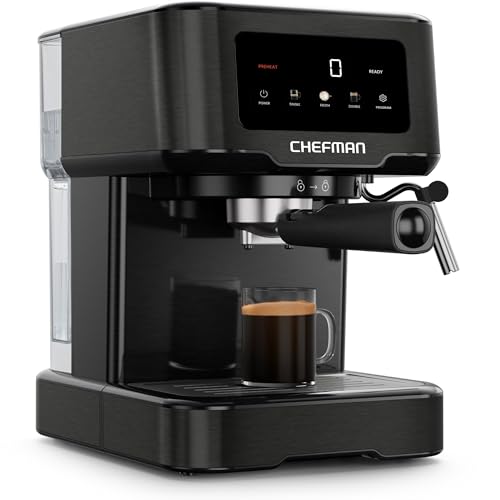
Chefman CraftBrew Espresso Machine, 15-Bar Pump Digital
- ✓ Easy to use touch controls
- ✓ Powerful 15-BAR pump
- ✓ Compact and stylish design
- ✕ Takes a few minutes to heat up
- ✕ Limited color options
| Pump Pressure | 15 BAR |
| Water Tank Capacity | 1.5 liters |
| Power Consumption | 1350 Watts |
| Voltage | 120 Volts |
| Brew Settings | Adjustable shot volume and brew strength |
| Additional Features | Built-in milk frother, steam wand, programmable timer |
This Chefman CraftBrew Espresso Machine has been sitting on my wishlist for a while, mainly because I was eager to see if it could really deliver that café-quality espresso at home. When I finally got my hands on it, I immediately noticed how sleek and compact it is—perfect for my small kitchen counter.
The first thing that caught my eye was the 15-BAR pump. It really does produce that rich, bold espresso shot I crave.
I loved how easy it was to switch between single and double shots using the touch control panel—no fuss, just a quick tap. The built-in milk frother works like a charm, creating creamy foam for cappuccinos and lattes without any hassle.
Brewing feels customizable, which is a big win. I could adjust the shot volume and water amount with the programmable features—perfect for my preference for a mellow lungo or a concentrated ristretto.
The 1.5-liter water tank is surprisingly spacious, meaning I could make multiple drinks without constantly refilling.
The machine’s design is both modern and easy to clean. The removable water tank simplifies filling and washing, and the exterior wipes down effortlessly.
The built-in steam wand heats up quickly, giving me that satisfying textured milk for my espresso drinks.
While it’s a great machine overall, I did notice it takes a little time to heat up initially. Also, the price point for such a feature-packed device is quite reasonable, making it accessible if you’re serious about crafting specialty coffee at home.
AERCANA 20 Bar Espresso Machine with Milk Frother, 34oz Tank

- ✓ Compact and stylish design
- ✓ Fast heat-up time
- ✓ Powerful steam wand
- ✕ Requires preheating
- ✕ Smaller water tank
| PumpPressure | 20 Bar high-pressure pump |
| WaterTankCapacity | 34 ounces (approximately 1 liter) |
| HeatingPower | 1450 Watts |
| PreheatTime | 20 seconds |
| SteamWandFeatures | Powerful, dry, consistent steam for microfoam |
| Dimensions | 5.3 x 12.2 x 11.5 inches |
When I first fired up the AERCANA 20 Bar Espresso Machine, what immediately caught my eye was that sleek, modern look paired with a surprisingly compact footprint. It’s no larger than an A4 piece of paper but packs quite a punch with its 20-bar pro-pump system.
That pressure gauge right on the front isn’t just for show; it really helps you dial in your shots and see exactly what’s happening behind the scenes.
Using it felt almost like having a professional setup at home. The rapid 20-second preheat time meant I wasn’t waiting around for ages before brewing.
Plus, the high-efficiency 1450W heater heated water super fast, which is perfect on busy mornings. The steam wand is a highlight — it produces dry, velvety microfoam effortlessly, making latte art a breeze even for a beginner like me.
The size is just right for a countertop, and the stainless steel finish looks stunning and easy to clean. The 34oz water tank is detachable, so refilling and cleaning are straightforward.
I loved how intuitive the controls are; even if you’re new to espresso machines, you’ll find it simple to operate.
But the best part? You can craft café-quality espresso and lattes without leaving your house.
The balance between acidity and bitterness was spot on, and the crema was rich and thick. The only thing to keep in mind is to preheat properly and let the machine cool before brewing after frothing.
Overall, it’s a fantastic choice for coffee lovers wanting a versatile, space-efficient machine.
SHARDOR Espresso Machine 20 Bar, Espresso Machine Milk

- ✓ Easy to use touchscreen
- ✓ Powerful steam wand
- ✓ Compact stainless steel build
- ✕ Needs descaling regularly
- ✕ Limited color options
| Pump Pressure | 20 Bar |
| Motor Power | 1350W |
| Water Tank Capacity | 45 oz (1.33 liters) |
| Temperature Control | Three adjustable settings with NTC sensor |
| Steam Wand | Professional-grade with rich foam capability |
| Display and Controls | LED touchscreen with multiple one-touch functions |
As I reached for my morning cup, I couldn’t help but smile when I saw the SHARDOR Espresso Machine quietly humming on my countertop. The stainless steel finish feels sleek and sturdy in my hand, and I immediately appreciated how compact it is—fitting easily into my small kitchen space.
First, I played around with the touchscreen—such an upgrade from fiddling with buttons. The LED display is intuitive, with options for single or double shots and manual mode.
I loved how effortlessly I could customize the coffee strength and control the temperature, making each cup exactly how I like it.
The 20-bar pump kicks in with a satisfying hum, delivering rich, aromatic espresso that’s full-bodied and smooth. The powerful steam wand was a delight—frothed my milk to perfect, velvety foam in seconds, ideal for latte art and creamy cappuccinos.
Refilling the 45 oz water tank was hassle-free, and the removable drip tray kept my countertop clean. The included accessories like the tamper and filters made setup straightforward.
I also tested the descaling feature—super easy to activate, saving me from any brewing issues down the line.
Overall, this machine makes it simple to enjoy barista-quality drinks at home. Sure, it’s compact, but it punches above its weight with features that truly elevate your coffee game.
Whether you want a quick espresso or a frothy cappuccino, this machine handles both with style.
What Features Should You Prioritize in Specialty Coffee Machines?
When selecting the best machines for a specialty coffee bar, certain features are essential for achieving high-quality brews.
- Temperature Control: Consistent and precise temperature control is crucial for extracting the full flavor from coffee beans. Machines that allow you to set and maintain specific temperatures will enable you to tailor the brewing process to different types of coffee.
- Grind Size Adjustment: Having the ability to adjust the grind size allows baristas to customize the coffee extraction process. This feature is vital for different brewing methods, as the grind size can greatly affect the strength and flavor profile of the coffee.
- Pressure Control: For espresso machines, maintaining the right pressure during extraction is key to producing rich, flavorful shots. Machines with adjustable pressure settings help in refining the brewing process, allowing for better control over the final product.
- Build Quality: A robust and durable construction is important for machines that will see heavy use in a specialty coffee bar. High-quality materials not only enhance the machine’s lifespan but also contribute to better heat retention and overall performance.
- User-Friendly Interface: An intuitive and easy-to-navigate interface makes it simpler for baristas to operate the machine efficiently. Features such as touchscreen controls or programmable settings can significantly enhance the user experience and streamline the brewing process.
- Milk Frothing Capability: For those focusing on lattes and cappuccinos, an integrated milk frother is essential. Machines with advanced frothing systems can produce microfoam, which is crucial for creating café-quality milk-based drinks.
- Size and Capacity: Depending on the volume of coffee served, choosing a machine with the appropriate size and capacity is critical. Larger machines may be necessary for high-demand environments, while compact options are ideal for smaller setups without sacrificing quality.
- Cleaning and Maintenance Features: Machines that offer automatic cleaning cycles or easy access to components for maintenance can save time and ensure consistent performance. Regular upkeep is vital for maintaining the quality of coffee and prolonging the machine’s lifespan.
Which Types of Coffee Machines Are Ideal for a Specialty Coffee Bar?
When setting up a specialty coffee bar, choosing the right machines is crucial for providing high-quality brews. Here are the ideal types of coffee machines to consider:
-
Espresso Machines: A high-quality espresso machine is essential. Look for machines with dual boilers for optimal temperature control, enabling simultaneous brewing and steaming. Brands like La Marzocco or Nuova Simonelli offer excellent commercial options.
-
Pour-Over Systems: Pour-over coffee makers, such as the Kalita Wave or Hario V60, allow for manual brewing that highlights the unique flavors of each coffee bean. These systems require precise measurements and timing, appealing to coffee aficionados.
-
French Press & AeroPress: These manual brewing methods are ideal for showcasing unique flavor profiles. They cater to customers who appreciate a more hands-on approach and can provide a varied menu.
-
Coffee Grinders: Invest in high-quality burr grinders to ensure consistent grind size, essential for the best flavor extraction across brewing methods.
-
Batch Brewers: For high-volume service, a commercial coffee brewer allows for quick, consistent brewing. Brands like Fetco or Bunn are renowned for reliability.
Each of these machines contributes to crafting exceptional coffee experiences, catering to diverse tastes and brewing preferences.
What Are the Advantages of Espresso Machines in a Coffee Bar?
Espresso machines are essential for any specialty coffee bar, offering numerous advantages that enhance both the quality of coffee and the overall customer experience.
-
Precision and Consistency: High-end espresso machines allow for precise temperature and pressure control, ensuring that every shot is pulled with consistency. This results in a reliable taste profile that customers can trust.
-
Variety of Beverages: An espresso machine provides the foundation for a diverse menu, enabling the preparation of various drinks like lattes, cappuccinos, and Americanos. This versatility attracts a wider range of customers.
-
Speed and Efficiency: In a busy coffee bar environment, speed is crucial. Espresso machines can brew multiple shots simultaneously, allowing for quick service during peak hours and minimizing customer wait times.
-
Quality of Ingredients: Many espresso machines can enhance the extraction process, bringing out the best flavors in high-quality beans. This focus on ingredient quality can significantly impact customer satisfaction and loyalty.
-
Customizability: Advanced machines often come with programmable settings, enabling baristas to tailor drinks to individual customer preferences, whether it’s adjusting milk frothing temperatures or shot timing.
Investing in a quality espresso machine not only elevates the beverage offerings but also improves operational efficiency, making it a vital component of a successful specialty coffee bar.
How Do Pour-Over Coffee Machines Fit into a Specialty Coffee Setup?
Pour-over coffee machines play a significant role in creating a refined coffee experience at a specialty coffee bar.
- Manual Pour-Over Devices: These devices require the barista to control the pouring process, allowing for precision in brewing. They typically include items like the Chemex or Hario V60, which let users vary the grind size, water temperature, and pouring technique to enhance flavor extraction.
- Automatic Pour-Over Machines: Automatic machines such as the Technivorm Cup-One or Breville Precision Brewer simplify the pour-over process while maintaining high-quality coffee. They automate the water distribution and temperature control, ensuring consistency in each brew, which is essential for high-volume coffee bars.
- Hybrid Machines: Some machines combine features of both manual and automatic pour-over systems, offering flexibility for baristas. These machines often allow for pre-programmed settings but also enable manual adjustments, catering to both novice and experienced coffee enthusiasts.
- Temperature Control Devices: Temperature plays a crucial role in brewing pour-over coffee, and devices with built-in temperature control ensure optimal extraction. Machines that maintain precise temperatures help in achieving the best flavor profiles, which is vital in a specialty coffee setup.
- Water Quality Systems: Specialty coffee bars often invest in water filtration systems that enhance the quality of the brew. Good machines will include water quality management to ensure that the minerals in the water complement the coffee rather than detract from it, resulting in a balanced cup.
What Are the Most Reputable Brands for Specialty Coffee Machines?
Some of the most reputable brands for specialty coffee machines include:
- Breville: Breville is known for its innovative designs and user-friendly interfaces, making it a favorite among coffee enthusiasts. Their machines often include features like precise temperature control and integrated grinders, allowing users to craft high-quality espresso and specialty drinks at home.
- Rancilio: Renowned for the iconic Silvia espresso machine, Rancilio offers commercial-grade quality for home baristas. Their machines are built with durable materials and provide excellent steam power, which is essential for creating rich, creamy microfoam for lattes and cappuccinos.
- La Marzocco: A leader in the specialty coffee industry, La Marzocco is synonymous with high-end espresso machines. Their products are handcrafted in Italy and feature dual boilers and PID temperature control, ensuring optimal brewing conditions for professional-level coffee extraction.
- De’Longhi: Known for its versatility, De’Longhi produces a range of coffee machines that cater to various brewing styles. Their machines often come with integrated milk frothers and easy-to-use controls, making them a practical choice for those looking to explore different coffee beverages.
- Baratza: While primarily known for their grinders, Baratza is essential for the perfect coffee bar setup. Their grinders are designed to provide consistent grind sizes, which is crucial for brewing quality espresso and pour-over coffee, ensuring optimal flavor extraction.
- Gaggia: Gaggia combines tradition with modern technology, offering machines that are both stylish and functional. Their espresso machines often feature commercial-grade components and user-friendly controls, making them suitable for both beginners and advanced coffee enthusiasts.
- Technivorm: Technivorm specializes in drip coffee makers renowned for their superior brewing quality. Their machines are designed to brew coffee at the ideal temperature and time, ensuring a consistent and flavorful cup every time, which is essential for coffee lovers who appreciate a good brew.
What Budget Should You Expect for Setting Up a Specialty Coffee Bar?
Setting up a specialty coffee bar requires careful budgeting, especially when considering the best machines that will enhance the quality of coffee served.
- Espresso Machine: A high-quality espresso machine is essential for any specialty coffee bar as it forms the basis of many coffee drinks. Look for machines with dual boilers and precise temperature control to ensure optimal extraction, which can range from $2,000 to $20,000 depending on the brand and features.
- Grinder: The grinder is just as important as the espresso machine, as it significantly affects the flavor and aroma of the coffee. Invest in a commercial-grade grinder that offers consistency and uniformity in grind size, typically priced between $500 and $2,500.
- Brew Equipment: Depending on your offerings, various brewing equipment such as pour-over setups, French presses, or siphon brewers may be necessary. Each method provides a unique flavor profile and can vary in cost, with setups ranging from $100 to $1,500 for high-quality tools.
- Water Filtration System: Quality water is crucial for brewing exceptional coffee, as impurities can alter the taste. Investing in a good water filtration system will ensure consistent quality, with costs varying from $200 to $2,000 based on the system’s complexity.
- Refrigeration Unit: A refrigeration unit is essential for storing milk and other perishable ingredients. Consider an under-counter refrigerator or a display fridge, which can range from $500 to $3,000 based on size and energy efficiency.
- Point of Sale (POS) System: A reliable POS system will help manage transactions and inventory efficiently. This technology can range from $1,000 to $5,000 depending on the features you require, such as inventory tracking or customer management.
- Furniture and Decor: Creating a welcoming atmosphere with comfortable seating and appealing decor is key to attracting customers. Budget for furniture, such as tables and chairs, which can range from $1,000 to $5,000, depending on style and quality.
- Miscellaneous Supplies: Don’t forget to budget for various supplies like cups, lids, syrups, and cleaning products. These costs can add up quickly, typically ranging from $500 to $2,000 depending on the volume of your operation.
What Maintenance Is Necessary for Specialty Coffee Machines?
Proper maintenance is essential to ensure the longevity and optimal performance of specialty coffee machines.
- Daily Cleaning: Regular cleaning of coffee machines is crucial to prevent the buildup of coffee oils and residues that can affect flavor.
- Descaling: Descaling the machine periodically helps remove mineral buildup from water, which can impair functionality and efficiency.
- Replacing Water Filters: Using high-quality water filters and replacing them regularly ensures the water quality is maintained, which is vital for the taste of the coffee.
- Inspecting and Replacing Parts: Regularly checking components like the brew head, gaskets, and group heads for wear and tear allows for timely replacements and avoids potential issues.
- Calibration: Calibrating the machine periodically ensures that the brewing parameters such as temperature and pressure are set correctly for optimal coffee extraction.
Daily cleaning of coffee machines is crucial to prevent the buildup of coffee oils and residues that can affect flavor. This involves cleaning the brew group, rinsing out portafilters, and ensuring that all surfaces are free from coffee grounds and stains.
Descaling the machine periodically helps remove mineral buildup from water, which can impair functionality and efficiency. Depending on water hardness, this task may need to be performed every few weeks to several months to keep the internal components functioning properly.
Using high-quality water filters and replacing them regularly ensures the water quality is maintained, which is vital for the taste of the coffee. Filters can help eliminate impurities and minerals that could otherwise alter the flavor profile of the coffee.
Regularly checking components like the brew head, gaskets, and group heads for wear and tear allows for timely replacements and avoids potential issues. This proactive approach helps maintain the machine’s performance and prevents costly repairs down the line.
Calibrating the machine periodically ensures that the brewing parameters such as temperature and pressure are set correctly for optimal coffee extraction. This adjustment is key to achieving the desired taste and consistency in each cup of coffee brewed.
What Common Mistakes Should You Avoid When Selecting Coffee Machines?
When selecting coffee machines for a specialty coffee bar, it’s essential to avoid common pitfalls that can impact quality and efficiency.
- Ignoring the Quality of Brew: Many people overlook the importance of a machine’s brew quality, focusing instead on features or price. A machine that produces inconsistent or poor-quality coffee can undermine the entire specialty coffee experience, making it crucial to choose one known for its excellent extraction and flavor profile.
- Not Considering Maintenance Needs: Failing to account for the maintenance and cleaning requirements of the machine can lead to long-term issues. Specialty coffee machines often require regular upkeep to maintain peak performance, so it’s important to select a model that is easy to clean and serviceable to ensure longevity and consistent quality.
- Overlooking the Size and Capacity: Choosing a machine that doesn’t suit the volume of coffee you plan to serve can hinder your operations. If your coffee bar will have high customer traffic, it is vital to invest in a machine that can handle higher capacities without sacrificing quality or speed.
- Neglecting Training Requirements: Many coffee machines come with a learning curve that can be daunting for baristas. Selecting a machine that requires extensive training can slow down service and affect staff morale, so it’s beneficial to choose one that balances advanced features with user-friendliness.
- Focusing Solely on Price: While budget is an important consideration, prioritizing cost over quality can lead to poor investment decisions. Investing in a higher-quality machine may initially seem more expensive, but it will typically offer better durability, performance, and return on investment in the long run.
- Not Researching Brand Reputation: Skipping the research on the manufacturer’s reputation can lead to choosing a machine that may not meet your expectations. It’s advisable to look for brands with a proven history of reliability and customer service, as this can significantly impact your coffee bar’s success.