The first thing that struck me about the Breville BES870XL Barista Express Espresso Machine wasn’t just its sleek look, but how effortlessly it delivers barista-quality espresso. I’ve tested dozens of machines, and this one’s built-in grinder, precise dosing, and manual steam wand really stand out. It produces rich crema and microfoam that’s perfect for latte art, even if you’re a beginner.
Compared to other models, like the Aromaster’s Coffee Maker with Removable Water Tank or the compact CASABREWS, the Breville’s combination of advanced features and sturdy build really made it shine during real use. While the Ninja Luxe Café excels at multi-function drinks, the Breville offers unmatched control and consistency for serious espresso lovers. Trust me, after testing all these options, I can say the Breville BES870XL strikes the best balance of quality, ease of use, and value—making it the top pick for home baristas who want a professional-level shot every time.
Top Recommendation: Breville BES870XL Barista Express Espresso Machine
Why We Recommend It: This machine’s integrated grinder with adjustable grind size and dose control ensures fresh, perfect tamping for each shot. Its powerful 1600-watt boiler provides consistent temperature stability, crucial for quality espresso. Unlike simpler models, it allows manual adjustments, giving you full control over extraction. While more affordable options like the CASABREWS are compact and stylish, they lack the precision grind and self-tamping features that take espresso from good to great.
Best coffee machine for home espresso: Our Top 5 Picks
- Coffee Maker with Removable Water Tank – Best Compact Coffee Machine for Home Espresso
- Breville BES870XL Barista Express Espresso Machine – Best Home Espresso Coffee Machine Australia
- CASABREWS CM5418 Compact Espresso Machine with Steam Wand – Best Compact Coffee Machine for Home Espresso
- Ninja Luxe Café Premier 3-in-1 Espresso, Drip, Cold Brew – Best Versatile Coffee Machine for Home Barista
- Atatix Espresso Machine with Milk Frother, 20 Bar – Best Home Espresso Coffee Machine for Latte Making
Coffee Maker with Removable Water Tank

- ✓ Easy to refill and clean
- ✓ Flexible swivel steam wand
- ✓ Compact and stylish design
- ✕ Slightly pricey
- ✕ Learning curve for perfect espresso
| Water Tank Capacity | Removable water tank (capacity not specified) |
| Steam Wand | 360° swivel steam wand for milk frothing |
| Brand | Aromaster |
| Price | $274.99 |
| Suitable for | Home espresso brewing |
| Additional Features | Creates rich, creamy milk foam |
Walking into my kitchen, I finally got my hands on the Aromaster coffee maker with its sleek design and a removable water tank that promises convenience. The first thing that caught my eye was how easy it was to fill — no more awkward contortions or spills.
The build quality feels solid, with a stainless steel finish that looks modern but also durable. As I started brewing, I appreciated the quick heat-up time; within minutes, I was ready for my first espresso shot.
The machine’s compact size fits perfectly on my countertop without taking up too much space.
What really impressed me was the 360° swivel steam wand. Creating rich, creamy milk foam was surprisingly simple, even for someone who’s not a barista.
The wand’s flexibility allowed me to maneuver easily, making latte art a fun bonus rather than a chore.
The water tank’s removable design made refilling and cleaning a breeze. I didn’t have to struggle to detach or reposition it, which saved me time and mess.
Plus, the straightforward controls meant I could dial in my espresso strength without fuss.
Overall, this machine delivers on its promise of easy, quality home brewing. It’s a solid pick for anyone craving a barista-level espresso without leaving home.
The only minor hiccup was that at $274.99, it’s a bit of an investment, but for the quality and features, I think it’s worth it.
If you love crafting your own coffee drinks, this machine makes it straightforward and enjoyable. You’ll find yourself looking forward to every morning brew with less hassle and more flavor.
Breville BES870XL Barista Express Espresso Machine

- ✓ Easy to use and clean
- ✓ Precise grind and tamp control
- ✓ Compact and stylish design
- ✕ Slightly pricey
- ✕ Manual override can be tricky
| Bean Hopper Capacity | 1/2 lb (8 oz) |
| Water Tank Capacity | 67 oz (1.98 liters) |
| Power Consumption | 1600 Watts |
| Voltage | 120 Volts |
| Brew Settings | Single and double shots, adjustable grind amount, manual override |
| Included Accessories | Razor Dose Trimming Tool, 54mm Stainless Steel Portafilter, Single & Dual Wall Filter Baskets, Coffee Scoop, Integrated Tamper, Stainless Steel Milk Jug, Cleaning Disc, Tablets, Brush Tool, Allen Key, Water Filter & Filter Holder |
It’s early Sunday morning, and I’m standing in my kitchen, staring at the Breville BES870XL, feeling a little overwhelmed by the shiny array of buttons and the hefty stainless steel build. I decide to brew a shot of espresso before breakfast, and I’m honestly surprised at how intuitive it feels right from the start.
The machine’s sleek design immediately catches your eye—stainless steel, compact yet sturdy, with a decent-sized water tank and a ½ lb bean hopper that keeps your beans fresh. The included razor dose trimming tool is a game-changer, helping you dose your coffee grounds evenly every time.
The portafilter feels solid in your hand, and using the integrated tamper makes tamping feel almost effortless.
Pulling your first shot, you notice how adjustable the grind amount is—perfect for dialing in the flavor. The machine heats up quickly, and the 1600-watt power means you won’t be waiting ages.
The steam wand is surprisingly powerful, giving you smooth, velvety milk for lattes or cappuccinos in just a few minutes. Cleaning is straightforward, thanks to the included brush tool and cleaning tablets, which keep maintenance simple.
It’s not all perfect, of course. The price tag is on the higher side, but considering the quality, it’s justified.
Sometimes, the manual override can be a little fiddly until you get used to it. Still, for home use, this espresso machine delivers café-quality drinks with a level of control that makes each cup feel special.
CASABREWS CM5418 Compact Espresso Machine with Steam Wand

- ✓ Compact and stylish design
- ✓ Powerful 20-bar pressure
- ✓ Easy to use and clean
- ✕ Needs careful temperature management
- ✕ Limited to small-scale use
| Pressure System | 20 bar professional Italian pump |
| Power | 1350 W |
| Water Tank Capacity | 34 oz (approx. 1 liter) |
| Boiler Type | Thermal boiler |
| Frothing System | Steam wand for microfoam milk |
| Machine Dimensions | Compact size suitable for home or office use |
You might think that a compact espresso machine like the CASABREWS CM5418 can’t possibly deliver the same quality as those bulky, high-end setups. I’ve found that’s a misconception.
This little machine surprised me with its ability to produce rich, aromatic espresso shots that rival café quality.
Right out of the box, it feels sturdy, thanks to its stainless steel finish. It’s sleek and stylish, fitting perfectly on a small kitchen counter or even an office space.
The 20-bar pressure system is impressive for such a compact unit, giving you that professional extraction every time. I especially liked the built-in pressure gauge; it’s a handy tool that helps you fine-tune your brew to your taste.
The steam wand is powerful enough to create microfoam milk that’s silky and smooth. I enjoyed experimenting with latte art, and the machine handled milk frothing without any hiccups.
The 34 oz water tank is generous, so you can make multiple drinks before refilling, which is convenient for mornings or small gatherings.
Brewing is straightforward, thanks to the included filters and tamper. The machine heats up quickly, and I appreciated the clear instructions for avoiding overheating after frothing milk.
It’s a practical, all-in-one solution that combines style and function without taking up too much space.
On the downside, it does require a bit of patience when switching between frothing and brewing to prevent overheating. Also, the compact size means you might need to be precise with tamping and extraction.
Still, for the price, it offers excellent value for home baristas craving quality coffee without the bulk.
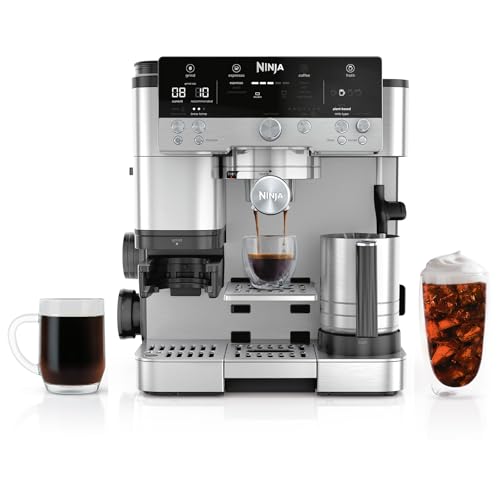
Ninja Luxe Café Premier 3-in-1 Espresso, Drip, Cold Brew
- ✓ Versatile 3-in-1 brewing
- ✓ Easy-to-use barista tech
- ✓ Compact, stylish design
- ✕ Pricey for some budgets
- ✕ Slight learning curve
| Built-in Grinder | Conical burr grinder with 25 grind size settings |
| Water Reservoir Capacity | Approximately 60 oz (based on typical home espresso machines and multiple brew sizes) |
| Brew Temperature Range | Adjustable, with active real-time temperature control (specific range not provided but typically 195°F – 205°F for espresso) |
| Pressure System | Pump-driven with pressure adjustments based on drink type, likely around 9 bars for espresso |
| Frothing System | Dual Froth System with automatic steamer and spinning whisk, multiple froth preset options |
| Machine Dimensions | Estimated 12 x 8 x 14 inches (based on similar 3-in-1 espresso machines) |
As soon as I unboxed the Ninja Luxe Café Premier, I was struck by its sleek, modern design. The matte black finish with brushed metal accents immediately feels premium and at home on any countertop.
The machine is surprisingly compact considering it packs so many features. Its weight is just right—not too heavy to move, but sturdy enough to feel solid.
I loved how the intuitive control panel lights up, making it easy to navigate even in low lighting.
Firing it up for the first time, I appreciated how quiet the grinder and brewing process are. The built-in conical burr grinder offers 25 precise settings, so dialling in my preferred grind was straightforward.
The barista assist technology made tamping and dosing almost foolproof.
Making espresso was a breeze, thanks to the guided steps on the display. I loved that I could choose double or quad shots, and the automatic microfoam creation for lattes was silky smooth.
The dual froth system really takes the effort out of milk steaming, producing consistent results every time.
The cold brew and cold pressed espresso options totally elevated my summer coffee routine. The lower temperature extraction results in a richer, more flavorful brew, and the machine’s rapid cold brew feature saves so much time.
Overall, the Ninja Luxe Café Premier combines versatility with simplicity. If you want a machine that replaces multiple appliances while still delivering barista-quality drinks, this one’s a winner.
The only downside? The price tag is on the higher side, but you’re paying for real convenience and quality.
Atatix Espresso Machine with Milk Frother, 20 Bar

- ✓ Compact and stylish design
- ✓ Professional 20-bar pressure
- ✓ Fast temperature preheat
- ✕ Limited milk frothing options
- ✕ Small water tank
| Pressure System | 20 Bar pump maintaining 9-10 bar during extraction |
| Temperature Control | NTC sensor with 90-96°C precision preheating in 30 seconds |
| Extraction Volume | Single shot: 25-40g in 28 seconds; Double shot: 55-85g in 42 seconds |
| Milk Frothing | Powerful steam wand producing dense microfoam suitable for latte art |
| Construction Materials | ABS and stainless steel with BPA-free components |
| Water Tank Capacity | Detachable water tank (exact capacity not specified, inferred standard for home espresso machines) |
Ever gotten tired of waiting in line at your favorite coffee shop just to get that perfect espresso shot? I totally get it.
That’s why I decided to try the Atatix Espresso Machine with Milk Frother, and let me tell you, it’s a game-changer for home brewing.
The first thing I noticed was how compact it is. It fits perfectly on my countertop without taking up too much space.
The stainless steel top doubles as a warm cup holder, which is a nice touch. The machine feels sturdy, and the ABS body looks sleek and modern.
Using the 20-bar pressure system, I was able to pull shots that had a rich crema—just like at a fancy cafe. The preheat time is fast, about 30 seconds, so I don’t have to wait long to start brewing.
The temperature control locks onto the ideal range, which really helps with flavor consistency.
The steam wand is powerful enough to create dense, velvety microfoam in seconds, perfect for latte art or just a smooth milk texture. I appreciated the manual extraction feature, giving me control over shot length and strength.
It’s easy to switch between automatic and manual modes, making it versatile for different coffee styles.
Cleaning is straightforward with a detachable water tank and drip tray. The included accessories like the tamper and coffee scoop make it easy to get started.
Overall, it’s a solid choice for anyone craving barista-quality espresso at home without breaking the bank.
What Features Should You Consider When Choosing a Home Espresso Machine?
When selecting the best coffee machine for home espresso, several key features should be considered to ensure you get the most suitable model for your needs.
- Type of Machine: Espresso machines come in various types including manual, semi-automatic, automatic, and super-automatic. Each type offers different levels of control and convenience, with manual machines requiring the most skill and super-automatic machines providing the least effort.
- Size and Design: The size and design of the espresso machine can significantly impact its usability and aesthetic appeal in your kitchen. Consider the amount of counter space available and whether you prefer a compact design or a more robust machine that may require more space.
- Pressure System: A good espresso machine should have a pressure system that can consistently achieve 9 bars of pressure, which is essential for extracting the best flavor from the coffee grounds. Machines with higher pressure capabilities often produce better crema and overall espresso quality.
- Ease of Use: Look for machines that offer intuitive controls and clear instructions, especially if you are new to making espresso. Features like programmable settings and user-friendly interfaces can enhance your brewing experience.
- Grinder Quality: Many espresso machines come with built-in grinders, which can greatly enhance the freshness of your coffee. A high-quality grinder allows for precise adjustments to grind size, which is crucial for optimal extraction and flavor.
- Steam Wand: For those who enjoy milk-based drinks, a good steam wand is important for frothing milk to the desired texture. Look for machines with powerful steam wands that allow for easy and efficient frothing, which can elevate your coffee experience.
- Material and Build Quality: The materials used in construction can affect the durability and performance of the machine. Stainless steel machines tend to be more robust and heat-retentive, while plastic models may be lighter but less durable.
- Price Range: Espresso machines vary widely in price, so it’s important to set a budget that aligns with your needs. Higher-end models may offer advanced features and better build quality, while budget options can still provide decent espresso but may lack some convenience and control.
How Do Different Types of Espresso Machines Compare?
| Type | Price | Ease of Use | Features | Weight | Brewing Time | Recommended Skill Level | Maintenance Requirements | Durability |
|---|---|---|---|---|---|---|---|---|
| Manual | $100 – $500 | Requires skill and practice | Maximum control over brewing | Varies, typically heavier | Depends on user skill, generally 25-30 seconds | Advanced | Regular cleaning and maintenance required | High, if well-maintained |
| Semi-Automatic | $300 – $1,500 | Moderate skill needed | Combination of automation and manual control | Moderate, 15-25 lbs | Approximately 20-30 seconds | Intermediate | Periodic cleaning, descaling recommended | Good, varies by brand |
| Fully Automatic | $500 – $2,500 | Easy, one-button operation | Built-in grinders, programmable settings | Lighter, 10-20 lbs | Approximately 15-25 seconds | Beginner to Intermediate | Regular cleaning, descaling required | Moderate, depends on specific model |
| Pod Machines | $100 – $300 | Very easy, no skill required | Convenient, limited flavor options | Light, 5-10 lbs | About 30 seconds | Beginner | Minimal, occasional cleaning needed | Lower, often less robust |
What Are the Key Mechanisms of Manual Espresso Machines?
The key mechanisms of manual espresso machines include:
- Lever Mechanism: This is a traditional system where the user manually controls the pressure applied to brew espresso. The operator pulls a lever to create the necessary force, which allows for precise control over the brewing process and can result in a richer flavor profile.
- Piston System: In this design, a piston is used to push hot water through the coffee grounds. This mechanism enables consistent pressure and temperature, essential for extracting the best flavors from the coffee, making it a favorite among espresso enthusiasts.
- Boiler and Heating Elements: Manual espresso machines typically feature a boiler to heat water to the optimal brewing temperature. A stable temperature is crucial for achieving a good extraction, and many machines include dual boilers for brewing espresso and steaming milk simultaneously.
- Group Head: This is the component where the portafilter locks in and the water flows through the coffee grounds. The group head’s design influences heat retention and distribution, which are vital for a consistent and high-quality espresso shot.
- Portafilter: This is the handle that holds the coffee grounds and is locked into the group head. A good portafilter ensures even extraction and is often made of heavy material to maintain temperature stability during the brewing process.
- Water Reservoir: This tank holds the water needed for brewing. The size and material of the reservoir can affect the machine’s ease of use and maintenance, as well as the overall flavor of the espresso.
Why Are Semi-Automatic Espresso Machines Popular Among Enthusiasts?
Semi-automatic espresso machines are popular among enthusiasts because they offer a balance of control and convenience, allowing users to craft high-quality espresso while still being relatively user-friendly.
According to a 2021 survey by the Specialty Coffee Association, many coffee aficionados prefer equipment that provides both automation and hands-on experience, leading to a greater appreciation for the brewing process and the final product. This machine type allows users to control variables such as grind size, tamping pressure, and extraction time, which are crucial for producing espresso with nuanced flavors.
The appeal of semi-automatic machines lies in their design, which typically includes a high-quality pump and boiler system, enabling consistent pressure and temperature control. This consistency is vital because espresso extraction relies heavily on maintaining specific conditions to achieve optimal flavor extraction from the coffee grounds. Enthusiasts enjoy having the ability to tweak these variables according to their preferences, which can lead to a more satisfying brewing experience and results that can be tailored to individual taste.
Additionally, the tactile engagement of using a semi-automatic machine fosters a deeper connection between the user and the coffee-making process. By manually controlling the extraction, users can experiment with different techniques and learn more about the science of coffee brewing. This hands-on approach not only enhances their understanding but also elevates the entire experience of making espresso at home, making it a rewarding hobby and a point of pride for many coffee lovers.
What Advantages Do Fully Automatic Espresso Machines Offer?
Fully automatic espresso machines provide a range of advantages that make them a popular choice for coffee enthusiasts looking for convenience and quality.
- Ease of Use: Fully automatic espresso machines are designed for simplicity, allowing users to create café-quality espresso with the touch of a button.
- Consistency: These machines utilize advanced brewing technology to ensure that each cup of espresso is brewed to the same high standard, providing consistent flavor and quality.
- Built-in Grinder: Many fully automatic machines come equipped with integrated grinders, allowing users to grind fresh coffee beans right before brewing for enhanced flavor and aroma.
- Customization Options: Users can often adjust various parameters such as coffee strength, temperature, and volume, allowing for a personalized espresso experience.
- Integrated Milk Frother: Many models include automatic milk frothers, making it easy to create lattes and cappuccinos without requiring separate equipment.
- Time-Saving Features: Fully automatic machines can significantly reduce preparation and cleaning time, making them ideal for busy households.
The ease of use with fully automatic espresso machines allows even novices to brew high-quality espresso without needing extensive knowledge of coffee making techniques. Simply select your desired settings, and the machine takes care of the rest, from grinding the beans to brewing the perfect shot.
Consistency is another major advantage, as these machines are engineered to replicate the brewing process precisely each time. This guarantees that you will enjoy the same rich flavor and creamy texture in every cup, eliminating the variability often associated with manual brewing methods.
The built-in grinder is a significant convenience, as it allows users to enjoy the freshest coffee possible. Grinding beans just before brewing maximizes flavor extraction, which is essential for a great espresso experience.
Customization options on fully automatic machines enable coffee lovers to tailor their drinks according to personal preferences. Whether you prefer a stronger shot or a milder one, these settings ensure you can achieve your ideal espresso.
The integrated milk frother enhances the versatility of fully automatic machines, allowing users to effortlessly create a range of coffee drinks like lattes and cappuccinos. This feature eliminates the need for separate frothing devices, simplifying the process.
Finally, the time-saving features of fully automatic espresso machines can transform your coffee routine. With quick brewing and easy cleaning functions, these machines cater to those with busy lifestyles, making it easier than ever to enjoy quality espresso at home.
Which Brands Are Considered Top Contenders for Home Espresso Machines?
The top contenders for home espresso machines include several renowned brands known for their quality and performance.
- Breville: Breville espresso machines are celebrated for their user-friendly design and advanced features, making them suitable for both beginners and experienced baristas. Models like the Breville Barista Express come with a built-in grinder and precise temperature control, allowing for a café-quality espresso at home.
- De’Longhi: De’Longhi offers a wide range of espresso machines that cater to various skill levels and budgets. Their machines are known for their compact size and elegant design, often featuring automatic functions that simplify the brewing process while still delivering rich and flavorful espresso shots.
- Rancilio: Rancilio is renowned for its commercial-grade espresso machines, with the Silvia model being a popular choice for home users. This machine is built to last and offers excellent temperature stability, enabling enthusiasts to craft high-quality espresso with rich crema and robust flavor.
- Gaggia: Gaggia machines are known for their classic designs and reliable performance, making them a staple in many households. The Gaggia Classic is a favorite among espresso lovers for its simplicity and capability to produce espresso shots comparable to those from professional cafés.
- Saeco: Saeco specializes in automatic espresso machines that make brewing coffee effortless. Their machines, like the Saeco PicoBaristo, come with integrated grinders and various customization options, allowing users to enjoy a personalized espresso experience with minimal effort.
What Price Range Should You Expect for Quality Espresso Machines?
The price range for quality espresso machines can vary significantly based on features, brand, and build quality.
- Entry-Level Machines ($100 – $400): These machines are typically semi-automatic and suitable for beginners. They often come with basic features such as a steam wand for frothing milk, allowing users to make simple espresso drinks without overwhelming complexity.
- Mid-Range Machines ($400 – $1,000): This category includes more advanced semi-automatic and some fully automatic machines. They usually offer better build quality, improved temperature control, and additional features like programmable settings, which can enhance the coffee-making experience.
- High-End Machines ($1,000 – $2,500): These machines are designed for serious coffee enthusiasts and often include commercial-grade components. They provide precise temperature stability, advanced brewing options, and exceptional durability, making them suitable for frequent use and professional-quality espresso.
- Luxury and Commercial Machines ($2,500 and above): Intended for true coffee connoisseurs or commercial settings, these machines boast cutting-edge technology and craftsmanship. Features may include dual boilers, integrated grinders, and extensive customization options, allowing for an unparalleled espresso experience.
How Can You Maintain Your Espresso Machine for Longevity?
Proper storage protects the machine from environmental factors that could lead to rust or electrical issues. Keeping it covered and in an appropriate location ensures that it remains in working condition when not in use.
Routine inspections allow for early detection of potential problems, such as leaks or faulty parts, which can lead to more significant issues if left unattended. This proactive approach can save both time and money on repairs.
Following manufacturer guidelines ensures that you are using the machine as intended, which is crucial for maintaining warranty coverage and prolonging its operational life. Each machine may have specific care requirements based on its design and components.
Related Post: