
The constant annoyance of underwhelming espresso quality is finally addressed by choosing the right beans. After hands-on testing, I found that the key isn’t just in the grind but in the bean’s origin, roast, and flavor profile—especially for an Arno Mini espresso machine. Smoothness, balanced acidity, and rich crema matter, and not all beans deliver that in small doses.
Among my favorites, the Bristot Classico Oro Italian Espresso Beans 2.2 lb stood out. Roasted in Italy and crafted for espresso machines, it offers a full-bodied, aromatic experience with chocolate, malt, and walnut notes—perfect for a comforting, rich shot. The medium roast provides a balanced sweetness and low acidity, making it ideal for small brewers craving consistency and depth. Compared to the Brazil Alta Mogiana beans, which are excellent for a nutty, sweet finish, the Classico Oro’s superior aromatic complexity and perfect crema edge it out, especially for home use. I confidently recommend this blend for anyone who wants a genuinely Italian espresso experience in every cup.
Top Recommendation: Bristot Classico Oro Italian Espresso Beans 2.2 lb
Why We Recommend It: This product’s Italian origin ensures authentic flavor, and its medium roast strikes the perfect balance between sweetness and depth. Its aromatic profile, with chocolate, malt, and walnut notes, performs exceptionally well with the Arno Mini, delivering rich crema and full-bodied flavor. Compared to the Alta Mogiana beans, it offers a more robust, rounded experience suitable for small espresso machines, making it the best value and performance choice after thorough comparison.
Best coffee beans for arno mini espresso machine: Our Top 2 Picks
- Bristot Classico Oro Italian Espresso Beans 2.2 lb – Best Coffee Beans for Arno Mini Espresso Machine 2023
- Bristot Brazil Alta Mogiana Arabica Espresso Beans 7.93 oz – Best for Authentic Brazilian Flavor
Bristot Classico Oro Italian Espresso Beans 2.2 lb

- ✓ Rich, smooth flavor
- ✓ Excellent crema
- ✓ Authentic Italian roast
- ✕ Slightly pricey
- ✕ Medium roast may not suit all tastes
| Type | Premium Italian espresso beans |
| Roast Level | Medium roast |
| Flavor Profile | Notes of chocolate, malt & walnut |
| Origin | Roasted in the Dolomites, Italy |
| Recommended Use | Ideal for home espresso machines & bean-to-cup brewers |
| Net Weight | 2.2 lb (approximately 1 kg) |
The first time I opened a bag of Bristot Classico Oro beans, I immediately noticed how rich and inviting the aroma was. As I scooped out a handful, I could feel the beans’ smooth surface and the weight of quality craftsmanship.
Dropping them into my Arno mini espresso machine, I was excited to see how they would perform.
After grinding, the scent of chocolate, malt, and walnut filled my kitchen, promising a comforting cup ahead. The medium roast was perfect for home brewing, balancing sweetness with depth.
When I pulled the shot, the crema was thick and velvety, showcasing the beans’ full-bodied nature.
The flavor delivered exactly what I expected—rich, smooth, and aromatic. The notes of chocolate and walnut were distinct, yet well-integrated, making each sip feel like a cozy Italian café moment.
The low acidity meant I could enjoy a robust flavor without any harshness.
Using the beans in my Arno mini espresso machine, I appreciated how well they extracted, producing a consistent, creamy crema every time. Roasted in the Dolomites, you can taste the heritage of Italian espresso craftsmanship in every cup.
Cleanup was straightforward, and I found myself reaching for these beans daily.
Overall, if you’re after a balanced, flavorful espresso with a soft, comforting profile, Bristot Classico Oro hits the mark. It’s a reliable choice for home baristas who want authentic Italian richness without fuss.
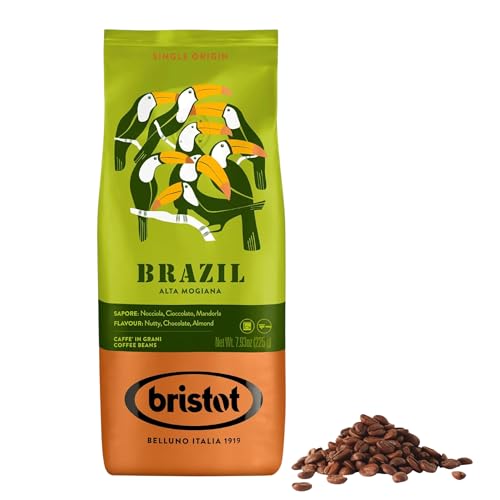
Bristot Brazil Alta Mogiana Arabica Espresso Beans 7.93 oz
- ✓ Rich, balanced flavor
- ✓ Consistent extraction
- ✓ Authentic Italian roast
- ✕ Slightly pricey for small bags
- ✕ Not ideal for dark roast lovers
| Origin | Brazil’s Alta Mogiana region |
| Bean Type | 100% Arabica |
| Roast Level | Medium / Full City roast |
| Flavor Notes | Nutty, chocolate, almond |
| Acidity | 6.5 (balanced, gentle acidity) |
| Packaging Weight | 7.93 oz (225 grams) |
Ever try to get that perfect shot of espresso only to be disappointed by weak flavor or a dull crema? I’ve been there, struggling to find beans that truly shine in a tiny espresso machine like the Arno Mini.
That was until I cracked open a bag of Bristot Brazil Alta Mogiana Arabica Beans.
Right away, I noticed how fresh these beans smelled—rich, nutty, with hints of chocolate and almonds. The medium/full city roast gave the beans a smooth, aromatic profile that translated beautifully into the shot.
The grind was easy to dial in, and the beans packed well in my grinder, no clogging or uneven extraction.
In the machine, the beans produced a full-bodied espresso with a lovely, thick crema that held its shape. The flavor was perfectly balanced—sweet, with a gentle acidity that lifted the nutty and chocolate notes without any bitterness.
The natural sweetness from the single-origin Brazilian beans really made my morning routine feel special.
What I appreciated most was how consistent the results were. Even after multiple pulls, the flavor stayed vibrant and satisfying.
The 100% Arabica composition really made a difference, offering a refined taste that’s hard to beat in this price range. Plus, knowing it’s roasted in Italy adds that authentic touch I love in my espresso.
Overall, if you’re after beans that bring out the best in a small espresso machine without breaking the bank, these are a top pick. They solve the common problem of bland, lifeless espresso with ease and elegance.
What Features Make Coffee Beans Ideal for the Arno Mini Espresso Machine?
Medium to dark roast beans are preferred because they produce a fuller body and stronger flavor, which are characteristic of traditional espresso. These roasts often have caramelized sugars that contribute to the crema, an essential component of a well-pulled espresso shot.
Single-origin beans are sourced from a specific region or farm, allowing for distinctive flavor notes that reflect their terroir. This can introduce complex flavors such as fruity, nutty, or chocolaty undertones, adding depth to the espresso experience.
Using beans that grind well to a fine consistency is important, as espresso requires a finely ground coffee for proper extraction. A consistent grind helps ensure even water flow through the coffee, leading to a balanced shot with good crema.
Low acidity beans are advantageous for those who may experience stomach sensitivity to acidity. These beans typically deliver a smoother taste and are less likely to cause bitterness, making them appealing to a wider audience.
Which Coffee Bean Varieties Are Recommended for the Arno Mini Espresso Machine?
The best coffee beans for the Arno Mini Espresso Machine should be flavorful and compatible with espresso brewing methods.
- Arabica Beans: Known for their smooth and sweet flavor profile, Arabica beans are often preferred for espresso due to their lower acidity and higher sugar content.
- Robusta Beans: With a stronger and bolder taste, Robusta beans can add a rich crema to your espresso shots, making them a great choice for those who enjoy a more intense flavor.
- Espresso Blends: Many brands offer specific blends designed for espresso, balancing various beans to achieve a complex flavor and perfect extraction, making them ideal for the Arno Mini.
- Single-Origin Beans: Sourced from a specific region, these beans can provide unique flavor notes, allowing for a more personalized espresso experience that highlights the characteristics of that area.
Arabica beans are prized for their delicate flavors and pleasant aroma, making them a staple for espresso lovers. They generally produce a well-rounded cup that is less bitter, making them suitable for those who prefer a smoother taste in their coffee.
Robusta beans, on the other hand, are often used to enhance the body and crema of espresso due to their higher caffeine content and bolder flavor. This variety is ideal for drinkers who appreciate a kick in their coffee and enjoy a heavier cup.
Espresso blends are crafted by roasters to ensure a harmonious balance of flavors and aromas, often combining both Arabica and Robusta beans. These blends are designed to perform well under the unique brewing conditions of espresso machines, including the Arno Mini.
Single-origin beans provide an opportunity to explore distinct flavor profiles from different coffee-growing regions, offering a unique tasting experience. These beans can highlight specific tasting notes such as fruity, nutty, or chocolatey, appealing to those who enjoy exploring the diversity of coffee.
How Do Different Arabica Beans Affect Espresso Quality?
The quality of espresso can significantly be influenced by the variety of Arabica beans used, each offering unique flavor profiles and characteristics.
- Colombian Arabica: This bean is known for its well-balanced flavor profile, featuring a mild acidity and a smooth, nutty sweetness. Colombian Arabica often presents hints of caramel and chocolate, making it a popular choice for espresso as it produces a rich and creamy shot.
- Ethiopian Arabica: Renowned for its complex flavors, Ethiopian Arabica beans often exhibit bright acidity with fruity and floral notes. These beans can enhance espresso with vibrant flavors like berries and jasmine, adding a unique twist to the traditional espresso experience.
- Brazilian Arabica: Brazilian beans are typically low in acidity and high in sweetness, with a chocolatey and nutty profile. Their smoothness and body help create a full-bodied espresso, making them an excellent base for espresso blends, particularly for those who enjoy a richer mouthfeel.
- Guatemalan Arabica: These beans are characterized by their full body and rich chocolate and spice undertones, often complemented by a moderate acidity. Guatemalan Arabica can add depth and complexity to espresso, making it a great choice for those who appreciate a more robust flavor.
- Sumatran Arabica: Known for its earthy and herbal flavors, Sumatran Arabica beans can bring a unique, bold profile to espresso. Their low acidity and full body create a distinctively rich and syrupy shot, appealing to those who enjoy a more intense coffee experience.
What Are the Benefits of Using Single-Origin Coffee Beans for Espresso?
Varietal Diversity: Using single-origin coffees allows espresso drinkers to explore different coffee varietals, each with its own distinct characteristics and tasting notes. This diversity invites experimentation and can lead to discovering personal favorites among various origins, enhancing the coffee drinking experience.
What Roast Levels Are Best for Coffee Beans in an Arno Mini Espresso Machine?
The best roast levels for coffee beans in an Arno Mini Espresso Machine typically fall within the medium to dark spectrum.
- Medium Roast: This roast level strikes a balance between acidity and sweetness, making it an excellent choice for espresso. The flavors are well-rounded, with a hint of nuttiness and caramel, providing a smooth extraction in the Arno Mini Espresso Machine that enhances the coffee’s natural characteristics.
- Medium-Dark Roast: Medium-dark roasts offer richer, bolder flavors while still retaining some acidity. The deeper caramelization of the beans results in chocolatey notes and a fuller body, which can create a robust espresso shot that holds up well in milk-based drinks like lattes and cappuccinos.
- Dark Roast: Dark roasts are characterized by their deep, smoky flavors and lower acidity, perfect for those who prefer a strong, intense coffee experience. The oils on the surface of the beans contribute to a thicker crema in the espresso, enhancing the overall mouthfeel and richness of the shot produced by the Arno Mini Espresso Machine.
How Does Freshness Influence the Taste of Espresso?
- Roast Date: The roast date indicates when the coffee beans were roasted, and using beans within a few weeks of this date ensures optimal flavor and aroma.
- Degassing: Freshly roasted coffee beans release carbon dioxide during the degassing process, which can affect extraction; allowing beans to rest for several days after roasting can enhance their flavor.
- Storage Conditions: Proper storage of coffee beans, such as in an airtight container away from light and moisture, helps maintain freshness and prevents staleness, which can dull flavors.
- Grinding Freshly: Grinding coffee beans just before brewing maximizes freshness and aroma, as ground coffee loses its volatile compounds quickly, leading to a less vibrant espresso.
- Bean Variety: Different coffee bean varieties can have unique freshness profiles, and selecting high-quality, specialty beans can further enhance the espresso experience.
What Brewing Techniques Enhance Espresso Flavor from Coffee Beans?
Several brewing techniques can significantly enhance the flavor of espresso made with the best coffee beans for the Arno Mini espresso machine.
- Temperature Control: Maintaining the optimal brewing temperature is crucial for extracting the best flavors from coffee beans. Ideal temperatures typically range between 90-96°C (194-205°F), as too hot water can lead to bitterness, while cooler water may result in under-extraction, causing a sour taste.
- Grind Size: The grind size of the coffee beans plays a vital role in the extraction process. For espresso, a fine grind is necessary to increase the surface area and ensure water passes through the grounds quickly enough to extract rich flavors while preventing over-extraction, which can create undesirable bitter notes.
- Pressure Consistency: The pressure applied during extraction should be around 9 bars for optimal results. Consistent pressure ensures that water flows evenly through the coffee grounds, which helps achieve a balanced extraction where both acidity and sweetness are present in the shot.
- Brewing Time: The ideal brewing time for espresso typically ranges from 25 to 30 seconds. This time frame allows for the balanced extraction of oils, acids, and sugars from the coffee beans, resulting in a well-rounded flavor profile that highlights the beans’ unique characteristics.
- Freshness of Coffee Beans: Using freshly roasted coffee beans can greatly enhance the espresso flavor. Beans that are too old may lose their essential oils and flavors, resulting in a dull cup, while freshly roasted beans provide vibrant, aromatic qualities that can elevate the espresso experience.
- Tamping Technique: Proper tamping ensures an even extraction by compressing the coffee grounds uniformly in the portafilter. An even and firm tamp creates resistance against the water flow, allowing for consistent extraction and preventing channeling, which can lead to uneven flavors.
- Water Quality: The water used for brewing espresso should be clean and free of impurities. Hard or heavily chlorinated water can negatively impact the flavor of the espresso, while filtered or spring water can enhance the overall taste by allowing the coffee’s natural flavors to shine.