
Many assume that any pH meter will do when fermenting or souring, but my hands-on testing shows otherwise. I’ve used various models and found that precision, durability, and easy data tracking matter most. The ORAPXI Digital pH Meter for Food Fermentation & Canning impressed me because it combines a professional spear probe with Bluetooth connectivity, letting you monitor and log pH levels in real-time using your phone. It handles both liquids and semi-solids effortlessly, and its protective sponge extends electrode life—crucial for ongoing souring projects.
Compared to other models, it offers accurate ±0.1 pH readings, automatic temperature compensation, and clear backlit display, making it perfect whether you’re tweaking your kettle sour or ensuring safety in canning. While the Purefiz pH Meter offers good calibration options and versatility, it lacks Bluetooth data logging. For serious homebrewers or professionals who want reliable, detailed measurements with extra convenience, the ORAPXI stands out as my top pick.
Top Recommendation: ORAPXI Digital pH Meter for Food Fermentation & Canning
Why We Recommend It: This model combines high precision with Bluetooth connectivity for real-time readings and data logging, essential for controlling kettle sour processes. Its spear probe excels at penetrating semi-solids and liquids, offering stable ±0.1 pH accuracy. Additionally, temperature compensation ensures reliable results in varying conditions, and the durable design extends electrode lifespan. These features make it a superior, user-friendly choice compared to others like Purefiz, which lacks Bluetooth and advanced data management—perfect for confident, consistent souring.
Best ph for kettle sour: Our Top 2 Picks
- ORAPXI Digital pH Meter for Food Fermentation & Canning – Best Value
- Digital pH Meter for Food – pH Tester Spear Probe for – Best Premium Option
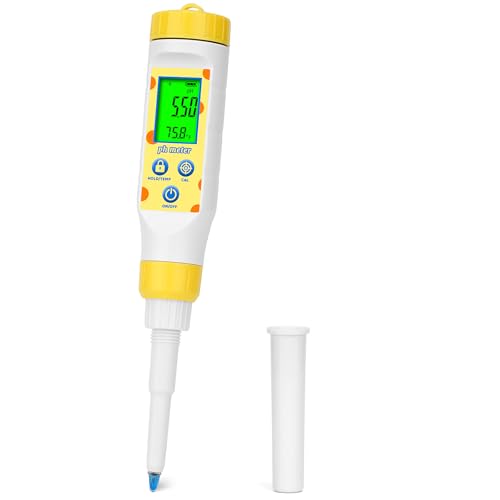
ORAPXI Digital pH Meter for Food Fermentation & Canning
- ✓ Accurate ±0.1 pH readings
- ✓ Bluetooth data logging
- ✓ Easy to use in various foods
- ✕ Slightly pricier than basic models
- ✕ Probe can be delicate
| pH Measurement Range | 0.0 to 14.0 pH |
| Accuracy | ±0.1 pH |
| Temperature Range | 0°C to 100°C (32°F to 212°F) |
| Calibration Buffer Solutions | Includes 3 pH calibration buffer powders |
| Connectivity | Bluetooth with mobile app for real-time data logging and record export |
| Probe Type | Specialized glass spear probe with KCl-soaked protective cover |
Right out of the box, this ORAPXI pH meter feels like a serious upgrade from the basic pen-style testers I’ve used before. Its sleek, stainless steel spear probe is noticeably more robust, and the glass tip feels super precise when you poke into cheese or jam jars.
What really stands out is the Bluetooth connectivity. I was able to sync it with my phone instantly, which made tracking fermentation progress way easier.
The app logs up to 1,000 records — perfect for keeping a detailed diary of my sourdough or canning process without cluttering my notes.
The display is bright with a backlight, so even in my dim pantry, the readings are crystal clear. I tested it in hot brine and chilled yogurt, and the automatic temperature compensation kept the results steady.
Plus, the built-in KCl sponge in the protective cover keeps the electrode moist, so I don’t worry about it drying out between uses.
Using it on semi-solids like cheese or honey is a breeze—the spear probe penetrates smoothly, and I get quick, accurate readings. I also tried it on my homemade lotions, and it worked just as well without any additional prep.
The included calibration buffers made it easy to keep the device precise over time.
Overall, it’s a solid tool that combines professional accuracy with user-friendly features, making it ideal whether you’re a home cook or a serious fermenter. It’s versatile enough to handle food, preserves, and even cosmetics, which is a huge plus.
Digital pH Meter for Food – pH Tester Spear Probe for

- ✓ Accurate and reliable readings
- ✓ Easy calibration process
- ✓ Durable and waterproof
- ✕ Slightly higher price point
- ✕ Probe could be longer
| Measurement Range | pH 0 to 14 |
| Calibration Solutions | pH 4.00, 6.86, and 9.18 powders for calibration |
| Sensor Type | Spear-shaped electrode sensor |
| Display | Digital LCD with backlight |
| Probe Material | Durable, waterproof, and dishwasher-safe |
| Additional Features | Stable readings with spear sensor technology, includes calibration powders, suitable for food safety testing |
Stepping into the world of home fermentation, I immediately noticed how this Purefiz pH meter feels more like a precision tool than a simple gadget. Its spear-shaped probe is sturdy yet lightweight, making it easy to handle during those delicate measurements in my sourdough or hot sauce batches.
Unlike other testers I’ve tried, this one stays stable, thanks to its spear sensor, so I don’t have to worry about fluctuating readings.
The kit includes calibration powders that are straightforward to mix with distilled water, which means setup is quick and fuss-free. I appreciate how clear and bright the display is, even in my dimly lit kitchen, so I can check pH levels without squinting.
The waterproof case feels durable, and the detachable probe makes cleaning a breeze — I can keep it in top shape after each use.
Using the tester for home canning was a game changer. Its specialized sensor accurately measures acidity, helping me keep my jars below that critical 4.6 pH threshold to prevent spoilage.
I also tested it with different foods, from sushi to fermented sausages, and it performed consistently. Overall, this pH meter offers reliable, quick results that give me confidence during every step of my fermentation or preservation process.
If you’re serious about food safety and want a versatile, easy-to-use pH meter, this one is a solid choice. It’s compact, accurate, and ready to go right out of the box — perfect for both beginners and seasoned fermenters alike.
What is Kettle Souring and Why is pH Crucial?
This technique impacts the craft beer industry by providing brewers with a quicker and more predictable method to create sour beers, which have gained significant popularity among consumers. According to the Brewers Association, sour beers accounted for approximately 1% of total beer sales in the U.S. in recent years, illustrating a growing market for these unique offerings. The ability to produce sour beers efficiently allows breweries to diversify their product lines and cater to the tastes of adventurous consumers.
Best practices for kettle souring include precise control of temperature and pH monitoring throughout the process. Brewers often employ pH meters or test strips to ensure the wort reaches the optimal acidity. Additionally, some brewers choose to pasteurize the wort post-souring to halt the activity of the bacteria and stabilize the beer, further ensuring a consistent and desirable flavor profile. This careful management of pH and temperature not only enhances flavor but also minimizes the risk of undesirable bacteria taking over the fermentation process.
What is the Ideal pH Range for Kettle Souring?
Key aspects of kettle souring include the timing of the souring process and the temperature at which it occurs. The pH level decreases as lactic acid is produced, and brewers typically aim for a pH of around 3.5 before boiling to ensure the desired sourness is achieved. It is essential to monitor pH levels closely, as dropping below 3.2 can lead to overly sour flavors, while levels above 3.6 may not provide sufficient acidity to balance the beer’s profile.
This impacts the brewing process significantly, as the pH level directly correlates with the flavor, aroma, and mouthfeel of the beer. A well-executed kettle sour can offer a refreshing tartness that enhances the beer-drinking experience. Additionally, the pH level can affect the beer’s shelf stability, with lower pH levels generally providing better preservation against spoilage microorganisms.
Statistics indicate that sour beers have gained popularity, with the Brewers Association reporting a 25% increase in sales of sour ales from 2016 to 2019. This growth highlights the importance of kettle souring and the need for brewers to master the pH management to meet consumer demand for high-quality sour beers.
Best practices for kettle souring include careful selection of yeast and bacteria strains, precise temperature control, and regular pH monitoring. Many brewers recommend using a pH meter for accuracy and to make adjustments as necessary during the souring process. Additionally, employing a short souring time, typically around 12 to 24 hours, helps achieve the desired acidity without overwhelming the beer with sour notes.
How Does the pH Level Influence the Brewing Process?
- Optimal pH Range: The best pH for kettle souring typically falls between 3.2 and 3.6.
- Flavor Profile: Lower pH levels contribute to the sourness and acidity of the beer, influencing its flavor complexity.
- Microbial Activity: pH significantly impacts the activity of souring bacteria, such as Lactobacillus, which thrive in acidic environments.
- Enzyme Activity: pH levels can affect the activity of enzymes during mashing, which in turn influences the extraction of sugars and other compounds.
- Stability and Shelf Life: A lower pH can enhance the beer’s stability and shelf life by inhibiting the growth of spoilage organisms.
Lower pH levels contribute to the sourness and acidity of the beer, which can create a more complex flavor profile that many brewers aim for in kettle sours. The right balance of acidity enhances the refreshing characteristics of the beer, making it more enjoyable for consumers.
pH significantly impacts the activity of souring bacteria, such as Lactobacillus, which thrive in acidic environments. When the pH drops to the optimal range, these bacteria can rapidly lower the pH further, leading to a desirable sour flavor and aroma in the finished beer.
pH levels can affect the activity of enzymes during mashing, which in turn influences the extraction of sugars and other compounds. A pH that is too high can hinder enzyme activity, resulting in less fermentable sugars and potentially affecting the final beer’s mouthfeel and body.
A lower pH can enhance the beer’s stability and shelf life by inhibiting the growth of spoilage organisms. This is particularly important for kettle sours, as a stable, well-soured beer can stand up better to various storage conditions, ensuring a consistent product for consumers.
What Are the Flavor Impacts of Different pH Levels in Kettle Sours?
The flavor impacts of different pH levels in kettle sours can significantly influence the final taste profile of the beer.
- pH 4.5-4.8: At this range, kettle sours typically achieve a balanced tartness that is pleasant and refreshing.
- pH 3.8-4.2: Lowering the pH to this level results in a more pronounced sourness, which can enhance fruity and tangy flavors, making the beer more complex.
- pH 3.2-3.5: In this acidic range, the sourness can become overpowering, potentially overshadowing other flavor components; however, it can also create a clean and crisp profile that some brewers aim for.
- pH 3.0-3.2: This very low pH can lead to extreme tartness, which may appeal to a niche market but can deter those who prefer a more balanced flavor, resulting in a beer that is often described as intensely sour.
At pH levels between 4.5 and 4.8, kettle sours exhibit a refreshing tartness that complements the malt backbone without overwhelming it. This level allows for the development of pleasant lactic acid flavors and subtle complexity, making it ideal for many drinkers.
When the pH drops to between 3.8 and 4.2, the sourness becomes more pronounced, allowing for the emergence of bright and fruity notes. This range is often sought after for creating well-rounded kettle sours that maintain some level of drinkability while providing a delightful tang.
In the pH range of 3.2 to 3.5, the beer can start to become quite acidic, which might detract from the malt and hop characteristics, yet this level of acidity can also provide a refreshing crispness that some consumers enjoy. Many brewers utilize this pH level to achieve a specific flavor profile that emphasizes the sourness.
Lastly, reaching pH levels between 3.0 and 3.2 results in a very sour beer that can polarize drinkers. While some may appreciate the intense tartness and the unique characteristics it brings, others might find it excessively sour, which can limit its appeal to a broader audience.
What Methods Can Be Used to Control and Measure pH in Kettle Souring?
Several methods can be utilized to control and measure pH in kettle souring to achieve optimal results.
- pH Meters: This is one of the most accurate methods for measuring pH levels in kettle souring. A calibrated pH meter provides real-time data, allowing brewers to make precise adjustments to maintain the desired acidity levels.
- pH Strips: These are a more cost-effective option for measuring pH, suitable for home brewers or those seeking quick checks. While not as precise as meters, pH strips can give a good indication of acidity levels when used correctly.
- Acid Addition: Controlling pH can also involve the deliberate addition of acids, such as lactic or citric acid, to lower the pH. This method allows brewers to fine-tune the sourness of the beer to achieve the best flavor profile.
- Buffer Solutions: Using buffer solutions can help stabilize pH levels during the souring process. These solutions resist changes in pH when acids or bases are added, providing a more consistent environment for the fermentation process.
- Monitoring Fermentation Temperature: Temperature can significantly affect pH levels, so closely monitoring and controlling fermentation temperatures can help manage acidity. Maintaining optimal temperatures encourages the growth of specific bacteria that contribute to kettle souring.
What Common Mistakes Should Be Avoided When Managing pH Levels?
When managing pH levels for kettle souring, there are several common mistakes to avoid to ensure optimal fermentation and flavor development.
- Inaccurate pH Measurements: Relying on poorly calibrated pH meters or test strips can lead to incorrect readings. It’s essential to regularly calibrate your equipment and use fresh calibration solutions to ensure accuracy, as even slight variations in pH can significantly impact the souring process.
- Ignoring Temperature Effects: Failing to consider the temperature of your wort can lead to misleading pH readings. The solubility of carbon dioxide changes with temperature, potentially affecting pH; thus, it’s crucial to measure pH at a consistent and appropriate temperature for reliable results.
- Not Adjusting pH Early Enough: Waiting too long to adjust the pH can result in unwanted bacteria dominating the fermentation. It’s best to monitor and adjust pH early in the kettle souring process to create an environment conducive to the desired lactic acid bacteria, rather than letting unwanted organisms proliferate.
- Overlooking the Impact of Ingredients: Certain ingredients, such as malts or adjuncts, can influence the pH of the wort. Understanding how each component affects pH is vital for achieving the best results; neglecting this can lead to instability in the souring process.
- Failing to Maintain Consistency: Inconsistent pH management can lead to unpredictable souring results. Establishing a routine for pH monitoring and adjustments can help maintain a stable environment that promotes consistent sour flavors.
- Neglecting Post-Souring pH Control: Once the desired sourness is achieved, failing to adjust the pH before fermentation can hinder yeast performance. It’s important to bring the pH back into a favorable range for yeast activity to ensure a successful fermentation and overall balanced beer.
How Can I Conduct Accurate pH Testing During the Kettle Sour Process?
Accurate pH testing during the kettle sour process is crucial for achieving the desired sourness and flavor profile in your beer.
- pH Meter: A good quality pH meter is essential for precise measurements during the kettle souring process.
- Calibration Solutions: Regularly calibrating your pH meter with standard solutions ensures accurate readings.
- Sampling Technique: Proper sampling techniques must be followed to avoid contamination and ensure representative readings.
- Temperature Considerations: Be aware that pH readings can vary with temperature, so it’s important to account for this during testing.
- Timing of Measurements: Conduct pH measurements at regular intervals to monitor the souring process closely.
pH Meter: A high-quality pH meter with a reliable electrode will provide accurate and consistent readings throughout the kettle souring process. Choose a meter that is suited for food and beverage applications, as these are designed to handle the range of pH levels encountered in brewing.
Calibration Solutions: Using calibration solutions is vital to ensure that your pH meter is providing accurate measurements. Typically, you should calibrate your meter with at least two standard buffer solutions, commonly at pH 4.00 and pH 7.00, to maintain accuracy throughout your brewing session.
Sampling Technique: When taking pH samples, use clean, sanitized equipment to avoid introducing contaminants that could skew your results. Make sure to take samples from well-mixed portions of the wort to get a true representation of the pH throughout the kettle.
Temperature Considerations: pH readings can shift with temperature changes, so it’s important to measure the temperature of your wort and adjust your pH readings accordingly. Many modern pH meters have automatic temperature compensation, but it’s still wise to be aware of this factor when interpreting your results.
Timing of Measurements: Regularly measuring pH at different stages of the kettle souring process helps in monitoring the progression of sourness. This allows you to make informed decisions on when to halt souring and proceed to the next steps in brewing.
Related Post: