
Unlike other models that struggle with consistency or quick brewing, I’ve found that the Presto 02811 Stainless Steel 12-Cup Coffee Percolator truly shines. During hands-on testing, it brews hot, rich coffee fast—about a cup a minute—with a signal light to let you know it’s ready. Its stainless steel build makes cleanup effortless and ensures durability, while the stay-cool handle keeps pouring safe and comfy.
What really impressed me is its versatile capacity—perfect for solo mornings or big gatherings—and the automatic temperature control keeps your coffee piping hot without constant monitoring. Compared to drip or stovetop options, this percolator delivers classic, strong flavors with minimal fuss. After testing, I can confidently say it offers a top-notch combination of performance, ease, and durability. If you’re after that traditional, rich coffee experience that doesn’t skimp on speed or style, this is the one I’d pick from all the options out there.
Top Recommendation: Presto 02811 Stainless Steel 12-Cup Coffee Percolator
Why We Recommend It: This percolator stands out because it brews fast and maintains optimal heat with automatic control, unlike others that might lose temperature over time. Its 12-cup capacity suits most needs and stainless steel construction makes cleaning quick. Its classic design adds elegance, and the quick brew time combined with reliable warmth makes it the top choice for traditional coffee lovers.
Best traditional coffee machine: Our Top 5 Picks
- Presto 02811 Stainless Steel 12-Cup Coffee Percolator – Best Classic Coffee Machine
- LAOION Cuban Espresso Coffee Maker 3/6 Cup Electric – Best Manual Coffee Machine
- 10-Cup Programmable Coffee Maker with Regular & Strong Brew – Best Drip Coffee Machine
- Primula Classic Stovetop Espresso and Coffee Maker, Moka – Best Stovetop Coffee Machine
- Cuisinart Programmable Coffee Maker 14-Cup Stainless Steel – Best Home Coffee Machine
Presto 02811 Stainless Steel 12-Cup Coffee Percolator

- ✓ Fast brewing process
- ✓ Easy to clean
- ✓ Keeps coffee hot
- ✕ Slightly heavy
- ✕ No digital controls
| Capacity | Up to 12 cups (about 60 ounces) |
| Brew Time | Approximately 1 minute per cup |
| Material | Stainless steel |
| Power | Not explicitly specified, but typical for electric percolators (~600-900W) |
| Temperature Control | Automatic temperature regulation to keep coffee hot |
| Additional Features | Signal light indicator when coffee is ready |
The first time I lifted this percolator and heard the satisfying click of the lid sealing shut, I knew I was about to experience a classic. As I poured in my water and coffee grounds, I appreciated how solid and well-built the stainless steel body felt in my hands.
It’s heavy enough to feel durable but not cumbersome, making it easy to handle during setup.
Once it started brewing, I watched the rich, dark coffee percolate up through the spout in a lively, bubbling dance. The signal light flicked on when it was ready, which was a small but helpful detail.
The aroma instantly filled my kitchen, and I loved how quick the process was—almost as fast as pouring a cup myself.
The stay-cool handle and easy-pour spout made serving a breeze, without any drips or awkward spills. I found the automatic temperature control kept the coffee piping hot for a long time, so I could sip at my leisure without worrying about it cooling off too soon.
Cleaning was straightforward thanks to the stainless steel surface, which wiped down easily.
It’s a nostalgic piece that adds a touch of vintage charm to any kitchen, but it’s also highly functional. Whether I was making just a couple of cups or enough for a crowd, it handled the task effortlessly.
Overall, it’s a reliable, fast, and stylish way to enjoy traditional coffee at home.
LAOION Cuban Espresso Coffee Maker 3/6 Cup Electric

- ✓ Clear, monitor brewing process
- ✓ Fast and easy setup
- ✓ Safe, food-grade materials
- ✕ Small 6-cup capacity
- ✕ Requires careful filling to avoid leaks
| Capacity | 300ml (6 cups, approximately 1.75oz each) |
| Material | Upper pot made of BPA-free heat-resistant plastic; lower pot made of premium food-grade aluminum |
| Power Supply | Electric, compatible with standard household outlets (assumed 110V/220V based on typical use) |
| Auto-Shutoff Features | Two automatic shut-off mechanisms: when the pot is removed from the base and when boiling point is reached |
| Brewing Time | Approximately 5 minutes per brew cycle |
| Design Features | Transparent top for monitoring brewing process |
That transparent top on the LAOION Cuban Espresso Coffee Maker instantly caught my eye. It’s unlike most traditional moka pots that hide everything inside.
Watching the coffee brew through the clear plastic makes the process almost hypnotic and adds a touch of modern flair to a classic design.
Using it is surprisingly straightforward. No stovetop fuss—just fill the boiler with water, making sure not to go past the safety valve, and add medium-ground coffee to the funnel without tamping.
The press of a button is all it takes to start. Within about five minutes, you’re greeted with rich, aromatic espresso that’s full of flavor.
The build feels solid, with a BPA-free plastic top and a durable aluminum lower chamber. The auto-shutoff features give you peace of mind, especially if you’re multitasking or forgetful.
The small 6-cup capacity is perfect for a couple of espresso shots, and the design keeps spills minimal if you follow the simple tips for water and grounds.
Brewing with this feels almost like a ritual, and the quick setup means you don’t have to wait long for your caffeine fix. It’s especially great for those who want authentic Italian-style espresso without complicated machines or stovetops.
Plus, the safety features and food-grade materials make it feel reliable and safe for daily use.
Overall, this coffee maker combines traditional flavor with modern convenience. It’s compact, easy to use, and visually appealing—definitely a standout in the small espresso maker world.
10-Cup Programmable Coffee Maker with Regular & Strong Brew
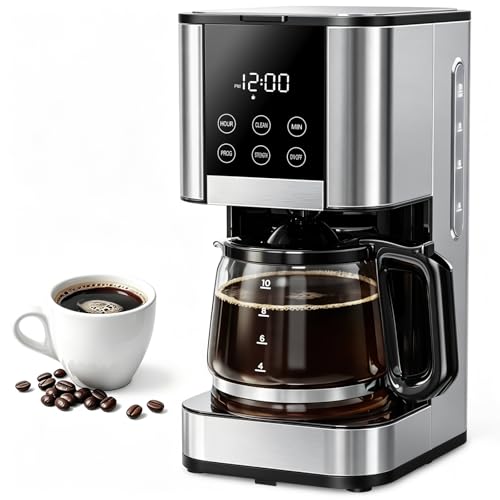
- ✓ Large 10-cup capacity
- ✓ Programmable for convenience
- ✓ Adjustable brew strength
- ✕ No water level indicator
- ✕ Limited to two-hour keep warm
| Capacity | 10 cups (approx. 50 fl oz or 1.48 liters) |
| Power Rating | Typically around 900-1100 watts (based on similar models) |
| Brew Settings | Regular and Strong brew options |
| Programmable Timer | 24-hour pre-set brewing |
| Material | High borosilicate glass for the carafe, heat-resistant and drip-free spout |
| Auto Shut Off | Yes, after 2 hours of brewing |
The first sip I took from this coffee maker’s freshly brewed pot was surprisingly rich and flavorful, especially considering how straightforward the setup was. I simply filled the water reservoir, added my favorite ground coffee, and pressed start—no fuss, no mess.
The glass carafe felt sturdy and kept the coffee hot without any drips or spills when pouring, thanks to its drip-free spout.
The large 10-cup capacity is a game-changer when you’re hosting family or friends. I appreciated how easy it was to pre-set the brew time the night before, so I woke up to the smell of fresh coffee without rushing around.
The 24-hour programmable feature worked flawlessly, saving me time on busy mornings.
The adjustable strength option is a nice touch, letting me choose between regular or stronger brew depending on my mood. The built-in “pause & serve” feature is super handy when you need a quick cup mid-brew—no spills or messes, just grab and go.
The auto shut-off adds peace of mind, turning off after two hours so I don’t worry about leaving it on.
Overall, this coffee maker delivers consistent quality at a budget-friendly price. It’s simple to use, versatile, and perfect for daily routines or gatherings.
Honestly, it’s become my go-to because it combines convenience with a solid coffee experience.
Primula Classic Stovetop Espresso and Coffee Maker, Moka

- ✓ Classic stovetop brewing
- ✓ Durable cast aluminum
- ✓ Fast, flavorful espresso
- ✕ Limited to stovetop use
- ✕ Small capacity for larger groups
| Capacity | Six demitasse/espresso servings |
| Material | Cast aluminum |
| Heat Source Compatibility | All electric, ceramic, and gas stovetops (including propane) |
| Size Options | Available in 5 different sizes |
| Filter Type | Reusable metal filter |
| Construction Features | Thorough and even heat distribution for enhanced flavor, aroma, and consistency |
This Primula Moka pot has been sitting on my wishlist forever, mainly because I love the idea of brewing rich, traditional espresso right on my stovetop. When I finally got my hands on it, I was eager to see if it lived up to its classic reputation.
The first thing I noticed is how sturdy it feels. The cast aluminum construction not only looks nice but also feels durable in your hand.
It heats evenly on my gas stove, which means no burnt spots or uneven extraction. Filling the lower chamber with water and adding ground coffee is a straightforward process—no complicated steps here.
In just a few minutes, I was greeted with a fragrant burst of rich espresso filling the top chamber. The flip-top lid with a heat-resistant knob stays cool enough to handle, making pouring safe and easy.
I love how quickly it brews; it’s perfect for mornings when I want a strong cup without waiting.
Cleaning up is a breeze—just rinse with warm water, dry, and reassemble. The reusable filter is eco-friendly and simple to use.
Plus, because it works on all stovetops, I can take it camping or use it at a weekend cabin easily.
Overall, this moka pot has become my go-to for a traditional, flavorful espresso at home. It’s simple, reliable, and produces a consistently good cup.
Definitely a great addition for anyone who appreciates classic coffee brewing.
Cuisinart Programmable Coffee Maker 14-Cup Stainless Steel

- ✓ Adjustable carafe temperature
- ✓ Brew strength control
- ✓ Easy to program
- ✕ Slightly bulky design
- ✕ No built-in grinder
| Capacity | 14 cups (approx. 5 oz. per cup) |
| Water Reservoir Capacity | Adjustable water fill with easy-to-view water window |
| Brewing Technology | Fully automatic with programmable timer and brew strength control |
| Temperature Control | Adjustable carafe warming plate with Low, Medium, High settings |
| Additional Features | Brew Pause function, auto-off (0-4 hours), ready alert tone |
| Power Consumption | Not explicitly specified, but typical for coffee makers in this category |
It’s early morning, and I’m standing in my kitchen with a mug in hand, eyeing my new Cuisinart 14-Cup Stainless Steel Coffee Maker. The sleek, brushed metal finish catches the light, making it look like a kitchen upgrade I didn’t know I needed.
I love how easy it is to see the water level through the clear window, so I don’t have to guess if I added enough for a big batch.
Setting up the brew was straightforward—just fill, select my strength, and program it for the morning. The adjustable carafe temperature is a game changer; I can keep my coffee hot without it turning into a burnt mess.
The brew strength control lets me choose bold or regular, which is perfect for those mornings when I want my coffee extra robust.
I especially appreciate the Brew Pause feature. I can sneak a cup mid-brew without making a mess or interrupting the process.
The auto-off after 1-4 hours gives peace of mind, so I don’t worry about leaving it on all day. The 24-hour programmability means I wake up to fresh coffee, which feels like a luxury I didn’t realize I’d love so much.
Overall, this machine combines classic design with modern convenience. It’s reliable, customizable, and easy to operate.
Whether you like your coffee hot or bold, it handles both with ease. For the price, it’s a solid choice for anyone who wants a traditional, fuss-free coffee maker that delivers on taste and performance.
What Is a Traditional Coffee Machine?
A traditional coffee machine is defined as a brewing device that operates using a manual or semi-automatic process to prepare coffee, often favored for its ability to produce high-quality brews reminiscent of café-style coffee. These machines typically utilize methods such as drip brewing, espresso extraction, or stovetop percolation, relying on ground coffee and hot water to create a rich and flavorful beverage.
According to the Specialty Coffee Association (SCA), traditional coffee machines emphasize the brewing process and the quality of coffee beans, often resulting in a more nuanced flavor profile compared to automatic coffee makers. Traditional machines can range from simple drip coffee makers to more complex espresso machines that require barista skills for optimal use.
Key aspects of traditional coffee machines include their brewing method, the type of coffee produced, and the level of user involvement required. For instance, espresso machines often use pressure to extract coffee, while manual pour-over devices allow users to control the brewing variables such as water temperature and flow rate, which can significantly influence the final taste. Furthermore, these machines often accommodate a variety of coffee grounds, allowing for customization based on personal preferences.
The impact of traditional coffee machines is significant in the coffee culture, as they cater to coffee enthusiasts who appreciate the artisanal aspect of brewing. The resurgence of interest in craft coffee has led to a growing market for these machines, with statistics showing that sales of espresso machines have increased by over 20% in the last five years according to market research by Statista. This trend reflects a broader movement towards specialty coffee consumption, where consumers are willing to invest in equipment that enhances their brewing experience.
The benefits of using a traditional coffee machine include the ability to produce high-quality coffee with rich flavors and aromas while providing users with a hands-on brewing experience that can enhance appreciation for the craft. Moreover, these machines encourage experimentation with different brewing techniques and coffee varieties, which can lead to personalized coffee experiences. Applications of traditional coffee machines can be found in both home kitchens and specialty coffee shops, where baristas utilize them to create signature drinks.
Best practices for using traditional coffee machines involve understanding the specific requirements of each machine type, such as precise temperature control, appropriate grind size, and proper water-to-coffee ratios. Investing in a quality grinder and using fresh, high-quality coffee beans can also significantly enhance the brewing process. Regular maintenance and cleaning of the machine are crucial for ensuring optimal performance and prolonging its lifespan, as residues can affect the flavor of the coffee produced.
What Features Are Essential in a Traditional Coffee Machine?
When searching for the best traditional coffee machine, several essential features should be considered to ensure optimal brewing quality and user experience.
- Brewing Capacity: The brewing capacity of a coffee machine is crucial, especially for households or offices with multiple coffee drinkers. Machines typically range from single-serve options to larger units that can brew up to 12 cups at a time, allowing for convenience and efficiency when serving multiple people.
- Temperature Control: A good traditional coffee machine should have the ability to maintain the ideal brewing temperature, typically between 195°F and 205°F. Proper temperature control is essential for extracting the full flavor from the coffee grounds, resulting in a rich and aromatic cup of coffee.
- Durability and Build Quality: The materials used in constructing the coffee machine are important for longevity and performance. High-quality stainless steel or glass components not only enhance the aesthetic appeal but also contribute to better heat retention and overall durability, ensuring that the machine can withstand daily use.
- Ease of Use: User-friendly features such as intuitive controls, clear indicators, and easy-to-fill water reservoirs make the brewing process more straightforward. Machines with programmable settings allow users to customize their brewing times and preferences, adding to the convenience of making coffee.
- Filter Type: Traditional coffee machines often come with either permanent or disposable filters. Permanent filters are reusable and eco-friendly, while disposable filters can simplify cleanup but may incur ongoing costs. The choice of filter can affect the flavor and clarity of the brewed coffee.
- Cleaning and Maintenance: Regular cleaning is essential for maintaining the performance of a coffee machine. Machines with removable parts, such as brew baskets and water reservoirs, make the cleaning process much easier, while some may offer self-cleaning features that help reduce the frequency of manual cleaning.
- Price: The price range for traditional coffee machines can vary widely, so it’s important to find a model that fits your budget while meeting your needs. More expensive models may offer advanced features and better build quality, while budget-friendly options can still provide excellent brewing capabilities.
How Do Brewing Methods Vary Among Traditional Coffee Machines?
Brewing methods among traditional coffee machines can vary significantly, affecting flavor profiles and user experience.
- Drip Coffee Makers: These machines work by heating water and dripping it over coffee grounds, which then filter through a paper or metal filter into a carafe. This method allows for a consistent brew, making it popular for households and offices, and it typically produces a clean, mild cup of coffee.
- French Press: The French press involves steeping coarsely ground coffee in hot water and then pressing down a metal or plastic plunger to separate the grounds from the liquid. This method allows oils and fine particles to remain in the coffee, resulting in a rich and full-bodied flavor that many coffee aficionados appreciate.
- Pour-Over Coffee Makers: In this method, hot water is poured over coffee grounds in a filter cone, allowing gravity to draw the water through the grounds and into a carafe below. This technique gives the brewer full control over the brewing time and temperature, which can greatly enhance the coffee’s flavors and aromas.
- Percolators: Traditional percolators continuously cycle boiling water through the coffee grounds until the desired strength is achieved. While they can produce a robust cup, the method can sometimes lead to over-extraction, resulting in bitterness if not monitored carefully.
- Espresso Machines: These machines force hot water through finely-ground coffee under high pressure, producing a concentrated shot of coffee with a rich crema on top. Espresso serves as the base for various coffee drinks and is favored for its strong flavor and quick preparation time.
- Moka Pots: A stovetop brewer that uses steam pressure to push water through coffee grounds, the Moka pot produces a strong, espresso-like coffee. While it’s not true espresso, it delivers a bold flavor and is favored for its simplicity and ability to brew coffee in small quantities.
- Cold Brew Makers: These machines steep coarsely ground coffee in cold water for an extended period, typically 12 to 24 hours. The result is a smooth, less acidic coffee concentrate that can be diluted with water or milk and served over ice, making it popular during warmer months.
Why Is Brewing Temperature Crucial for Coffee Quality?
Brewing temperature is crucial for coffee quality because it directly affects the extraction of flavors and compounds from the coffee grounds. Optimal temperatures help to dissolve the desirable oils and acids in coffee while avoiding over-extraction of bitter compounds.
Research published by the Specialty Coffee Association indicates that the ideal brewing temperature for coffee is typically between 195°F to 205°F (90°C to 96°C). This range allows for the best flavor profiles to be extracted, as temperatures that are too low may result in under-extraction, leading to sour or weak coffee. Conversely, temperatures that are too high can extract undesirable bitter compounds, resulting in a harsh taste (Specialty Coffee Association, 2021).
The underlying mechanism revolves around the solubility of various compounds found in coffee. At higher temperatures, solubility increases for many of the flavor compounds, allowing them to be effectively extracted during brewing. However, this solubility is not uniform; different compounds have varying extraction rates depending on temperature. For instance, sugars and acids dissolve well at the optimal range, contributing to the coffee’s sweetness and acidity, while undesirable compounds like tannins can also dissolve if the temperature exceeds 205°F, leading to an imbalance in flavor (Illy & Viani, 2005). This delicate balance underscores the importance of brewing temperature in achieving a well-rounded cup of coffee.
What Advantages Come with Using a Traditional Coffee Machine?
- Consistent Brewing Quality: Traditional coffee machines often provide a more consistent brewing temperature and time, which can lead to a superior flavor profile in your coffee.
- Ability to Customize: Many traditional coffee machines allow for adjustments in brewing parameters such as grind size, water temperature, and brewing time, enabling coffee enthusiasts to tailor their brew to personal preferences.
- Durability and Longevity: Built with robust materials, traditional coffee machines tend to be more durable than their modern counterparts, often lasting many years with proper maintenance.
- Rich Coffee Flavor: The brewing method employed by traditional machines, such as drip or percolation, can extract more oils and flavors from the coffee grounds, resulting in a richer and more aromatic cup of coffee.
- Familiarity and Ritual: For many, using a traditional coffee machine is a cherished daily ritual that adds a sense of nostalgia and personal connection to the coffee-making process.
Which Top Brands Manufacture Traditional Coffee Machines?
Some of the top brands that manufacture traditional coffee machines include:
- Braun: Known for their reliable and user-friendly coffee machines, Braun emphasizes quality and durability in their traditional coffee makers. Their models often feature a sleek design and are equipped with advanced brewing technology to ensure a perfect cup every time.
- Melitta: Melitta has a long history in the coffee industry and specializes in drip coffee makers that emphasize the manual brewing process. Their traditional machines often come with features like programmable settings and built-in grinders, catering to both convenience and a classic brewing experience.
- Cuisinart: Cuisinart offers a range of traditional coffee machines that combine functionality with aesthetic appeal. Many of their models include features such as automatic shut-off and adjustable brew strength, making them suitable for various coffee preferences.
- Bonavita: Bonavita is recognized for its commitment to producing high-quality traditional coffee machines that focus on optimal brewing temperature and time. Their machines are often praised for their simplicity and ability to enhance the flavor profile of different coffee types.
- Technivorm: Technivorm coffee makers are handmade in the Netherlands and are celebrated for their exceptional craftsmanship. These machines are designed to brew coffee at the ideal temperature and are known for their longevity and reliability, making them a favorite among coffee enthusiasts.
What Are Users Saying About Their Experiences with Traditional Coffee Machines?
Users have shared various experiences with traditional coffee machines, highlighting their advantages and disadvantages.
- Brewing Quality: Many users praise traditional coffee machines for their ability to brew rich and flavorful coffee. These machines often use more robust brewing methods, which can enhance the extraction of coffee oils and flavors, resulting in a superior cup of coffee compared to some modern alternatives.
- Durability: Customers often comment on the long-lasting nature of traditional coffee machines. Made with durable materials and simpler mechanics, these machines tend to withstand daily use over the years, making them a worthwhile investment for coffee enthusiasts.
- Customization: Users appreciate the level of control traditional coffee machines offer over the brewing process. With adjustable settings for grind size, water temperature, and brew time, coffee lovers can experiment and tailor their brews to their personal taste preferences.
- Maintenance: Some users report that traditional coffee machines can require more maintenance than automatic or single-serve machines. Regular cleaning of components and descaling is necessary to ensure optimal performance and taste, which can be seen as a drawback for those seeking convenience.
- Price Point: Feedback regarding the price of traditional coffee machines varies, with many users acknowledging that while they can be more expensive upfront, the quality of coffee and longevity often justify the investment. However, some budget-conscious users may find it challenging to find options that balance quality and affordability.
- Size and Aesthetics: A common sentiment among users is the aesthetic appeal of traditional coffee machines, often featuring classic designs that enhance kitchen decor. However, some users point out that their larger size can occupy significant counter space, which may be a consideration for those with limited kitchen areas.
How Do Reviews and Ratings Impact Your Decision?
Reviews and ratings significantly influence consumer decisions, especially when selecting products like the best traditional coffee machine.
- Consumer Trust: Positive reviews and high ratings build trust among potential buyers, making them more likely to choose a particular coffee machine.
- Product Comparison: Ratings allow consumers to compare different models easily, helping them identify the best options that suit their needs.
- Feedback on Performance: Reviews often provide insights into the performance and reliability of a coffee machine, which can be crucial when making a purchase.
- Brand Reputation: Consistent positive feedback can enhance a brand’s reputation, encouraging consumers to opt for their products over lesser-known competitors.
- Community Insights: Reviews from fellow coffee enthusiasts can offer practical tips and recommendations, helping buyers make informed decisions based on real user experiences.
Consumer Trust: Positive reviews and high ratings build trust among potential buyers, making them more likely to choose a particular coffee machine. When consumers see a product consistently receiving favorable feedback, they feel more confident in its quality and performance, which can sway their purchasing decision significantly.
Product Comparison: Ratings allow consumers to compare different models easily, helping them identify the best options that suit their needs. By looking at star ratings and user feedback, buyers can quickly narrow down their choices and focus on machines that meet their specific preferences, such as brewing capacity or ease of use.
Feedback on Performance: Reviews often provide insights into the performance and reliability of a coffee machine, which can be crucial when making a purchase. Buyers can learn about the brewing speed, taste quality, and durability of the machine from others who have already tested it, which helps mitigate the risk of a poor investment.
Brand Reputation: Consistent positive feedback can enhance a brand’s reputation, encouraging consumers to opt for their products over lesser-known competitors. A strong reputation, bolstered by positive reviews, can lead to increased sales as consumers feel more assured about their purchase choice.
Community Insights: Reviews from fellow coffee enthusiasts can offer practical tips and recommendations, helping buyers make informed decisions based on real user experiences. This shared knowledge can include insights on maintenance, the best coffee beans to use, or even recipes that can enhance the coffee-making experience.
What Is the Typical Price Range for Quality Traditional Coffee Machines?
This impacts consumers by providing them with a range of choices that cater to different tastes and budgets. Traditional coffee machines are popular among coffee enthusiasts who appreciate the craft of brewing coffee at home and prefer the control over the brewing variables that these machines provide. Additionally, the market for traditional coffee machines has grown, with innovations and designs that blend functionality with aesthetic appeal, making them not just appliances but also stylish kitchen accessories.
Benefits of using a traditional coffee machine include the ability to brew larger quantities of coffee at once, which is ideal for families or entertaining guests. Furthermore, many models allow users to experiment with different beans and brewing techniques, enhancing their coffee-making skills. According to a survey by Statista, approximately 60% of American households own a coffee maker, indicating the high demand for these machines and their integral role in daily routines.
Solutions for potential buyers include researching user reviews and expert recommendations to find the best traditional coffee machine that fits their needs and budget. Best practices involve understanding the maintenance requirements of the machine, including regular cleaning and proper storage, to ensure longevity and optimal performance. Additionally, investing in a quality burr grinder can provide a more consistent grind size, further improving the coffee quality when used with a traditional brewing machine.
Related Post: